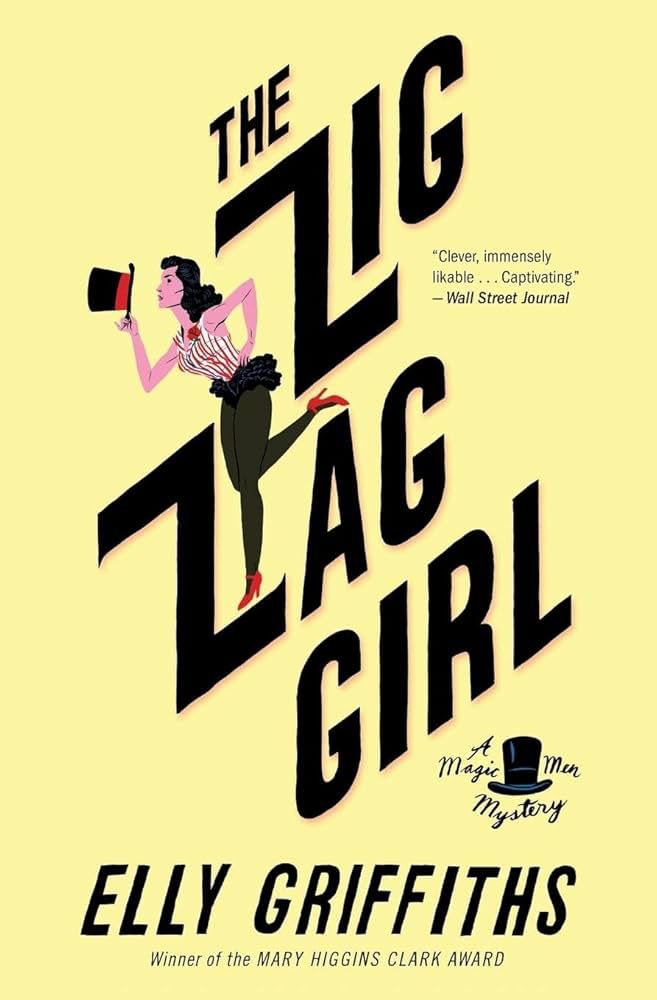
Author: Elly Griffiths
Genre: Mystery / Thriller
Introduction
There are crime novels that entertain, and then there are crime novels that enthrall. The Zig Zag Girl falls into the latter category — a compulsively readable, atmospheric mystery that pulls you into 1950s Brighton with a magician’s sleight-of-hand and refuses to let you go. Elly Griffiths blends noir, nostalgia, and emotional depth so deftly that the book becomes more than a murder mystery; it becomes a meditation on memory, trauma, performance, and the ghosts that follow us long after the war is over.
From the very first chapter, it’s clear this is a story written with intention. Nothing is extravagant, nothing wasted. Every clue, every character, every emotional beat is placed with precision — as though Griffiths herself is the magician inviting you to look closely while still, somehow, surprising you at every turn.
This is crime fiction crafted with heart, intelligence, and impeccable storytelling instinct.
What It’s About
Set in 1950, The Zig Zag Girl opens with a grisly discovery: the dismembered body of a woman found in Brighton, posed to mimic the classic stage illusion known as the Zig Zag trick. Assigned to the case is DI Edgar Stephens, a quiet, thoughtful detective still haunted by his service in the war. When he recognises the name of the victim — and the theatrical signature of the crime — Edgar realises this case is a message meant for him.
Years earlier, he served in a secret war unit known as the Magic Men, a group of soldiers whose job was to use illusions, misdirection, and theatrical trickery to deceive the enemy. Their leader? Max Mephisto, a charismatic stage magician whose career continues to flourish in postwar vaudeville.
When more murders follow, each echoing a famous magic act, Edgar and Max must navigate old wounds, old loyalties, and old betrayals to uncover who is targeting them — and why.
What unfolds is a crime novel that feels both deeply classic and refreshingly modern. Mystery lovers will relish the cleverness of the plot. History lovers will appreciate the immersive detail. Fans of character-driven stories will fall for the quiet vulnerability beneath every page.
Why This Book Stands Out
What makes The Zig Zag Girl so compelling is not just the mystery — though the mystery is superb — but the emotional intelligence beneath it. Griffiths pulls off a rare combination: she creates a narrative that’s twisty without being gimmicky, atmospheric without being heavy, and deeply character-focused without slowing the pace.
1. Its setting feels alive
Brighton in the 1950s is not just a backdrop — it’s a breathing world. We walk through shabby boarding houses, faded music halls, and cold police stations still bearing the scars of wartime austerity. Griffiths captures nostalgia without romanticising it. This is a world rebuilding itself, a world where glamour and grief are often one and the same.
2. The use of magic is clever and purposeful
The magic in the story isn’t whimsical. It’s technical, gritty, and grounded in real illusionist craft. Griffiths leans into the psychology of performance — the art of distraction, the construction of spectacle, the loneliness that lives beneath fame. The stage magic parallels the emotional magic of the characters, who hide more than they reveal.
3. The characters are unforgettable
Edgar and Max are two sides of the same coin — one steady, one wild; one rooted, one restless. Their dynamic forms the heart of the novel. Their shared history, the wounds of their war unit, and the tension between past and present bring an emotional richness that elevates the story far beyond procedural crime.
What I Loved Most
The quiet melancholy
Beneath the murder and intrigue, there is profound sadness woven through the novel. These characters have survived a war but lost pieces of themselves in the process. Their attempts to rebuild — whether through family, career, or companionship — feel painfully human.
Edgar longs for stability but carries survivor’s guilt. Max hides loneliness behind showmanship. The Magic Men, once united, are now fragmented by time, secrets, and distrust. The novel becomes a study in how people hold their traumas differently — some bury them, some work around them, some turn them into performance.
The tenderness in unexpected places
Despite its dark subject matter, the book is full of gentleness. Edgar’s compassion for victims’ families, Max’s protectiveness toward young performers, the quiet companionship between two men who understand each other more than they admit — these moments give the novel its emotional heartbeat.
The moral complexity
Nothing is simple here — not loyalty, not justice, not guilt. Griffiths invites us to question what we owe the people who shaped us, even when those relationships hurt us. She asks whether the past can ever truly be left behind, and what happens when the stories we tell ourselves are illusions too.
A Book That Balances Darkness With Heart
What’s remarkable is how deftly Griffiths balances tone. The murders are brutal, but never gratuitous. The world is bleak, but never hopeless. The characters are flawed, but never cruel without cause. It’s a crime novel with depth, nuance, and soul — a rare combination in a genre often dominated by plot over people.
Griffiths gives us a mystery that respects our intelligence while also inviting emotional investment. You root for Edgar not just because you want the case solved, but because you want him to be okay. You root for Max because behind his bravado, he is achingly human.
This is crime fiction for readers who want more than suspense. It’s for readers who want resonance.
The Writing: Clean, Elegant, and Immersive
Griffiths’ prose is deceptively simple — clear enough to disappear, sharp enough to cut when it needs to, atmospheric enough to render every scene vivid. Her dialogue sparkles, especially in Max’s theatrical cadence and Edgar’s understated dry humour.
There’s no unnecessary flourish, no overwriting, no filler. Every chapter feels intentional. Every reveal is carefully timed. And the pacing — gradually intensifying but never chaotic — makes this a story you both race through and savour.
Themes That Stay With You
Trauma and reinvention
Every character is trying to rebuild in some way. The war haunts them all, shaping choices they don’t fully understand. The murders force them to confront the selves they’ve tried to leave behind.
Performance versus reality
Just as magicians misdirect their audiences, the characters misdirect each other — and themselves. The novel becomes an exploration of what we hide, why we hide it, and the cost of those illusions.
Friendship shaped by hardship
Edgar and Max’s friendship is deep, complicated, and profoundly moving. It is a relationship forged under fire and tested by time. Their bond is the emotional core of the book.
Why It’s a Five-Star Read
Simply put: it delivers everything I want from a historical mystery and more.
- A richly textured world
- Deeply human characters
- A plot both clever and emotionally resonant
- A fresh, original concept executed with precision
- Writing that’s atmospheric without heaviness
- Emotional stakes that elevate the mystery
It’s a book with intelligence, charm, sorrow, and style — a crime novel that respects its genre but transcends it.
Final Thoughts
The Zig Zag Girl is a masterful blend of crime, history, and emotional depth. Elly Griffiths has created a world you want to linger in — smoky, haunted, glittering with old magic and new wounds. It’s the rare mystery that makes you feel as much as think.
Whether you come for the murder, the magic, or the melancholy, you’ll stay for the characters who linger long after the final page.
This is the kind of novel that reminds you why you love crime fiction — not for the puzzle alone, but for the humanity inside it.