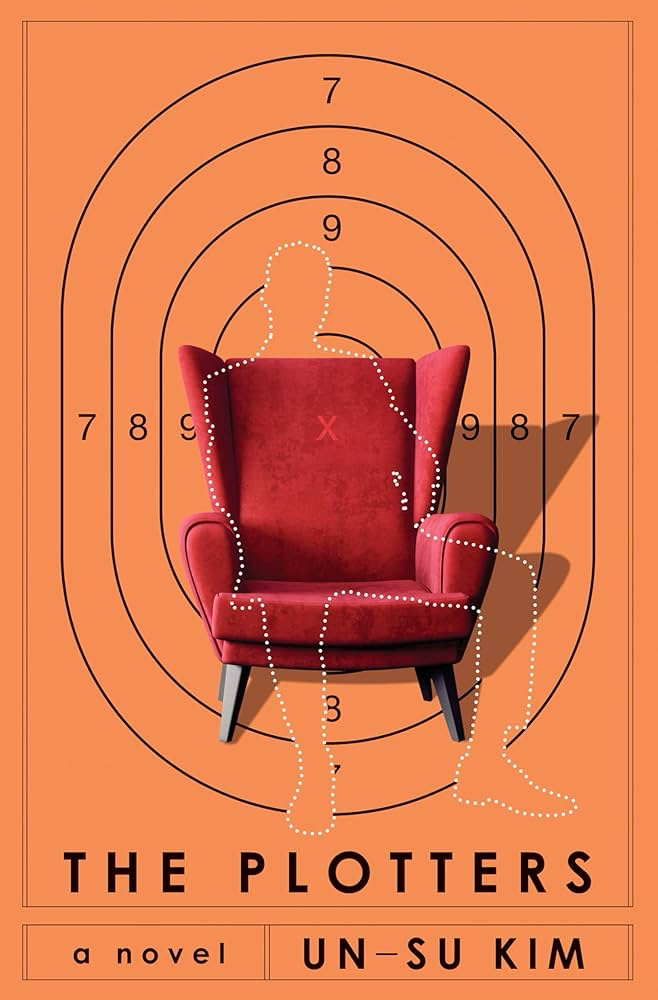
Author: Un‑su Kim | Translator: Sora Kim‑Russell
Genre: Literary Thriller / Crime Fiction / Existential Noir
Ideal For: Readers who enjoy cerebral assassins, bureaucratic conspiracies, dark humor, and literary flair in genre fiction
Why I Picked It Up
From the outset, The Plotters seemed compellingly unconventional—a novel of assassins operating not in shadows but from within a decrepit library. Combining sharp wit, literary philosophy, and existential melancholy, Un‑su Kim’s debut in English (translated by Sora Kim‑Russell) promised something like Kill Bill meets Murakami. And it mostly delivers an atmospheric and intelligent take on contract killing that feels fresh in both tone and structure.
Plot Summary (Spoiler‑Free)
Reseng is a professional contract killer raised in the Doghouse—a library run by a retired assassin known as Old Raccoon. There, assassins follow orders from unseen “plotters” who plan hits and manage logistics. When Reseng begins to doubt these faceless bosses—and stumbles upon a bomb in his apartment—he pulls off his last hit and disappears into ordinary life. But the world that created him soon closes in again, forcing him to confront the shadowy cabal and the fragility of his own anonymity. Alternating philosophical musings with bloody violence, the novel becomes an existential journey within a hyper-capitalised underworld.
Why It Works (and What Holds It Back)
Dark Humour Meets Corporate Realism
Un‑su Kim portrays assassins as gig-economy labourers in a commodified fountain of death—where efficiency matter more than style. The satirical lens turns a murder-for-hire black market into a workplace—minus benefits, plus existential risk.
Philosophical & Emotional Depth
Reseng’s journey is more than action—it’s elegiac self-discovery. His habit of reading, even though Old Raccoon warned him literacy would doom him, becomes a symbol of resistance. And lines like “becoming ordinary is just as important as becoming special” illuminate the emotional stakes of invisibility .
Alluring Surrealism & Vivid Detail
The novel captures a dreamlike Seoul populated by eccentric characters: the ex-librarian with cross-eyed snooping skills, a pet cemetery operator, and a trio of quirky vigilante women bent on ending the assassin system. Kim blends absurdity, poetic violence, and David Lynch–style urban oddness into a striking sensory experience.
Sora Kim‑Russell’s Elegant Translation
Kim‑Russell renders Reseng’s halting reflections and dark humour with precision. His cats Desk and Lampshade, his quiet self‑aware narration, and even graphic scenes retain clarity and dry wit.
Pacing Issues and Ending Loose Ends
Major plot developments don’t arrive until late, and the final confrontation feels abrupt and open-ended. The focus turns inward at the expense of closure for subplots, leaving some threads dangling even after the brutal climax.
What Readers Will Love
- Intricate thrillers with poetic soul, like Blue Monday by Nicci French.
- Literary, existential noir, reminiscent of The Stranger by Albert Camus meets Tarantino violence.
- Fans of Murakami’s absurdist tone, paired with brutal genre flair.
- Readers curious about modern South Korean literary crime, with philosophers in assassin suits.
Personal Highlights
- Kafkaesque assassination bureaucracy: Offices planning murders as if they were corporate projects, with form submissions and kill-checklists.
- Reseng’s library origin: Raised among books rather than textbooks—the dark irony of a reader-trained killer.
- Visceral yet beautiful violence: Descriptions like severed fingers drifting midair beside a lit cigarette are both grotesque and strangely poetic.
- Absurdist side characters: The ex-librarian who snoops with cross-eyed aplomb, and the pet crematorium owner who existentially waxes about bodies and tuition costs.
- Corporate capitalism allegory: The assassination syndicate emerges as a fictional mirror to chaebol-run power structures and late capitalism outsourcing life-and-death decisions for profit.
Final Thoughts: Stylish, Thoughtful, and Perfectly Imperfect
The Plotters is a unique fusion of noir, existential drama, and dark satire. While it stumbles slightly in pacing and lacks some narrative closure, its ideas—about power, identity, bureaucracy, and violence—linger long after the final gunshot. Reseng’s quest to disappear becomes a subtle metaphor for modern alienation, and his philosophical musings elevate what could’ve been just another thriller.
For fans of cerebral, stylish crime fiction—and readers craving something that both bloody and beautiful—The Plotters delivers. It’s satisfying, surprising, often philosophical, sometimes surreal, and always intelligently crafted.
Four stars for ambition, tone, and haunting originality. A high-caliber thriller that defies genre without abandoning it.