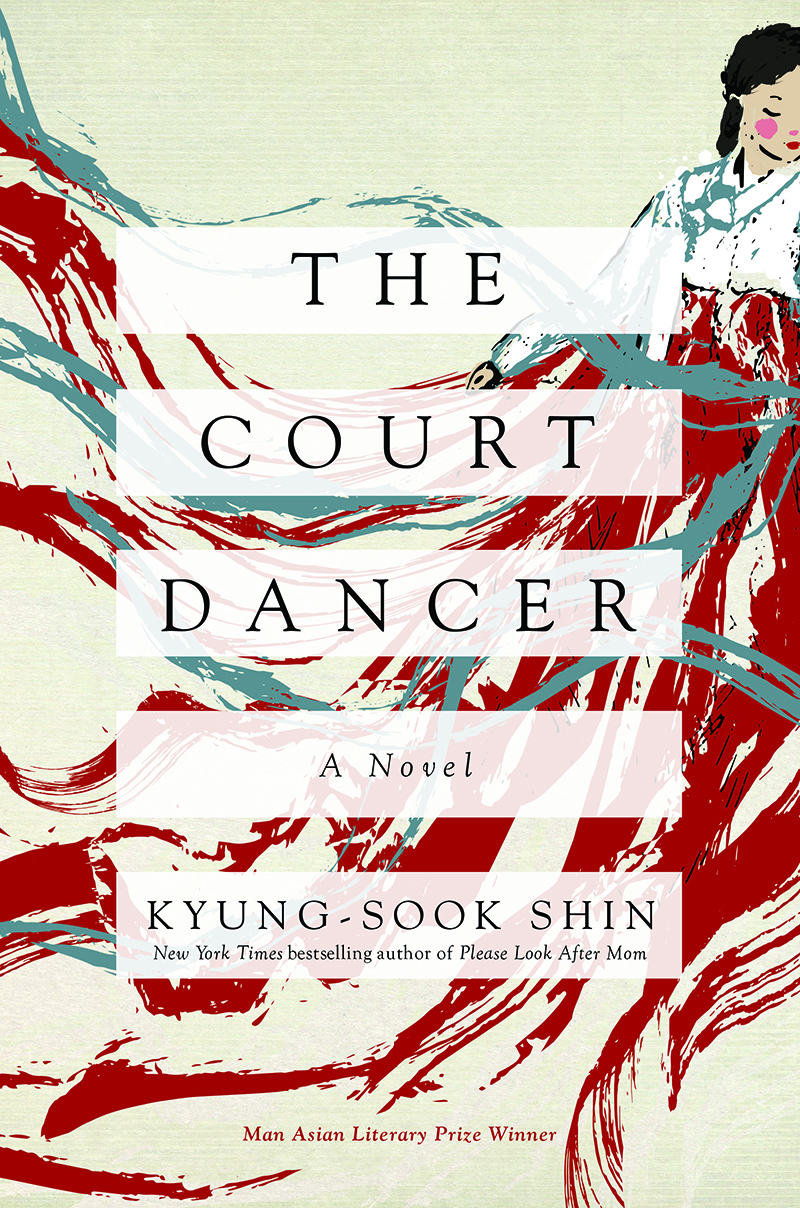
Author: Shin Kyung-sook
Genre: Historical Fiction / Literary Fiction / Korean Empire Era
Ideal For: Readers who crave lyrical prose, emotional depth, sweeping history, and unforgettable characters shaped by love, longing, and the tide of empire.
A Five-Star Review of The Court Dancer
Shin Kyung-sook’s The Court Dancer is the kind of novel that doesn’t just tell a story—it envelops you. It pulls you through time, placing you in the shimmering world of turn-of-the-century Korea, a moment when tradition met encroaching modernity, when nations collided, and when one woman’s inner world echoed the turbulence of an era.
This is historical fiction at its most intimate. The Court Dancer is lush, atmospheric, and heartbreakingly human. It explores the life of Yi Jin, a young woman whose grace and talent as a court dancer draws the attention of a French diplomat and ultimately changes the course of her life. But beneath her elegance lies a complex, questioning mind shaped by loss, loyalty, and the quiet ache of longing for a place she can call home.
Reading this novel feels like entering a dream—one made from silks, lantern light, and secrets—and emerging profoundly changed.
A Story Carried by a Woman Torn Between Worlds
Yi Jin is the emotional soul of this novel. Born into poverty and later taken into the royal palace, she becomes a beloved court dancer whose poise masks a painful past. When she meets Victor Collin de Plancy, a French diplomat deeply captivated by her, she is invited into a different world—one filled with books, music, European etiquette, and the intoxicating idea of reinvention.
But as Jin steps into new roles—beloved, muse, expatriate—she also slips further away from the self she once knew. Shin Kyung-sook masterfully captures this tension, drawing the reader into a woman’s internal struggle as she moves between nations, between identities, and between versions of herself.
Jin carries the burden of love for a homeland in turmoil. She carries the burden of being admired for beauty but seldom understood for her mind. And she carries the hope that somewhere in the world, she will not be torn between duty and desire.
It is this emotional complexity—far more than any romance—that elevates The Court Dancer into the realm of literary brilliance.
Shin Kyung-sook’s Lyrical Prose: A Work of Art in Itself
The first thing you notice about Shin Kyung-sook’s writing is its sheer poetry. Her sentences flow with the elegance of a silk ribbon in motion, echoing the delicacy of the dances she describes. You feel every movement. You see every costume. You smell the incense, the old wood of the palace, the ink on the letters Jin writes to herself but never sends.
Shin Kyung-sook has an uncanny ability to make history breathe—to turn documents and archives into emotional landscapes. Her prose is never rushed. It is patient, deliberate, atmospheric. It invites you to sit with each emotion.
And yet, for all its beauty, the writing never loses clarity. It guides you through cultural and political nuance without overwhelming you. Korea’s precarious position on the world stage at the end of the 19th century forms a powerful backdrop, but Shin always keeps her characters’ hearts at the center.
Few authors can balance lyricism with narrative propulsion so gracefully. Shin Kyung-sook does it with confidence and tenderness.
Themes That Make the Novel Unforgettable
Identity and Exile
Jin’s life is shaped by the question: Where do I belong?
Korea is changing rapidly; France offers safety but alienation. She becomes a symbol—a cultural beauty transported like a rare relic—yet never quite at home anywhere. The ache of displacement permeates her life.
Love Across Cultures
Shin doesn’t romanticise cross-cultural romance. Instead, she interrogates its power imbalance. Victor sees Jin at times as a woman, at times as a symbol of a mysterious East he cannot truly understand. Their affection is real, but it exists in a fragile, unequal space.
Female Agency in a Restrictive Era
Jin is born into one world, molded into another, and invited into a third. Yet she is never truly free. Shin shows how women historically navigated expectations, limitations, and survival through intelligence, subtlety, and silent rebellion.
Art as Liberation and Burden
Dance is Jin’s gift—but also her cage.
Books become her escape—but also the means by which she sees clearly what she has lost.
Art elevates her but also isolates her.
A Nation on the Brink
Korea’s political uncertainty—pressured by imperial forces, struggling to modernise—mirrors Jin’s personal instability. Her life becomes a microcosm of a country fighting to hold onto itself.
Characterisation: Achingly Human and Detailed
Yi Jin is one of the most memorable heroines in modern historical fiction. What makes her extraordinary is not perfection but contradiction. She is graceful but anxious, intelligent but cautious, hopeful but deeply wounded. Shin Kyung-sook builds her with empathy, allowing the reader to see her at her strongest and most fragile.
Victor, too, is rendered with nuance. He is not villain or saviour—simply a man shaped by his own world, unable to see all the layers of the woman he loves.
The supporting cast—palace attendants, diplomats, intellectuals—each play a distinct role in Jin’s evolution. No one feels flat. Everyone reflects a facet of the cultural or emotional conflict the novel explores.
The Historical Detail: Immersive and Meticulous
One of Shin Kyung-sook’s greatest strengths is her research. She paints late Joseon Korea and Belle Époque France with equal mastery, capturing the tension between tradition and modernity.
In Korea, she evokes royal rituals, courtly hierarchies, and the beauty of dance as cultural storytelling. In France, she portrays salons, cafés, operas, and bookshops with the intimacy of someone who understands the loneliness of living abroad.
History enhances the plot rather than overshadowing it. Jin’s story is fiction, but her emotional reality reflects the lives of countless women who faced radical change during that era.
Why This Book Deserves Five Stars
It is emotionally transformative.
You don’t simply read Jin’s story—you feel it. Her longing becomes yours. Her dreams become yours. Her heartbreak lingers.
It is a masterclass in blending fiction and history.
Rather than dry facts or melodrama, Shin gives us a story where personal fate intersects with political upheaval in a way that feels organic and meaningful.
It portrays female experience with rare sensitivity.
Jin’s life is shaped by forces beyond her control, yet she remains deeply self-aware, resilient, and quietly rebellious.
It is beautifully written.
Sentence after sentence feels like a piece of art. Few novels have this level of lyrical precision.
It offers cultural richness.
Readers unfamiliar with Korean history will learn without feeling lectured. Those familiar will appreciate its depth and nuance.
A Story That Stays With You
By the time The Court Dancer reaches its conclusion, you feel as though you have lived multiple lives. You understand the weight of exile, the sweetness and bitterness of love, the fragility of identity, and the brutal power of history.
The novel doesn’t aim to shock you. It aims to move you. It succeeds.
In the end, what resonates most is not the grandeur of courts or salons, but the quiet tragedies—letters unsent, dances performed for people who never truly see, the courage to step into the world knowing it may not welcome you.
Shin Kyung-sook gives voice to women who seldom appear in historical archives. She resurrects their hopes, their intellect, their artistry. And she asks us, gently but insistently, to bear witness.
Verdict: A Lyrical, Heartbreaking Masterpiece
The Court Dancer is not just a novel; it’s an experience. It is haunting, intelligent, beautifully written, and emotionally profound.
If you want a story that transports you across continents and centuries while illuminating the complexity of a single woman’s soul, you’ll find no finer choice.
This book will break your heart quietly and beautifully — and you will thank it for doing so.