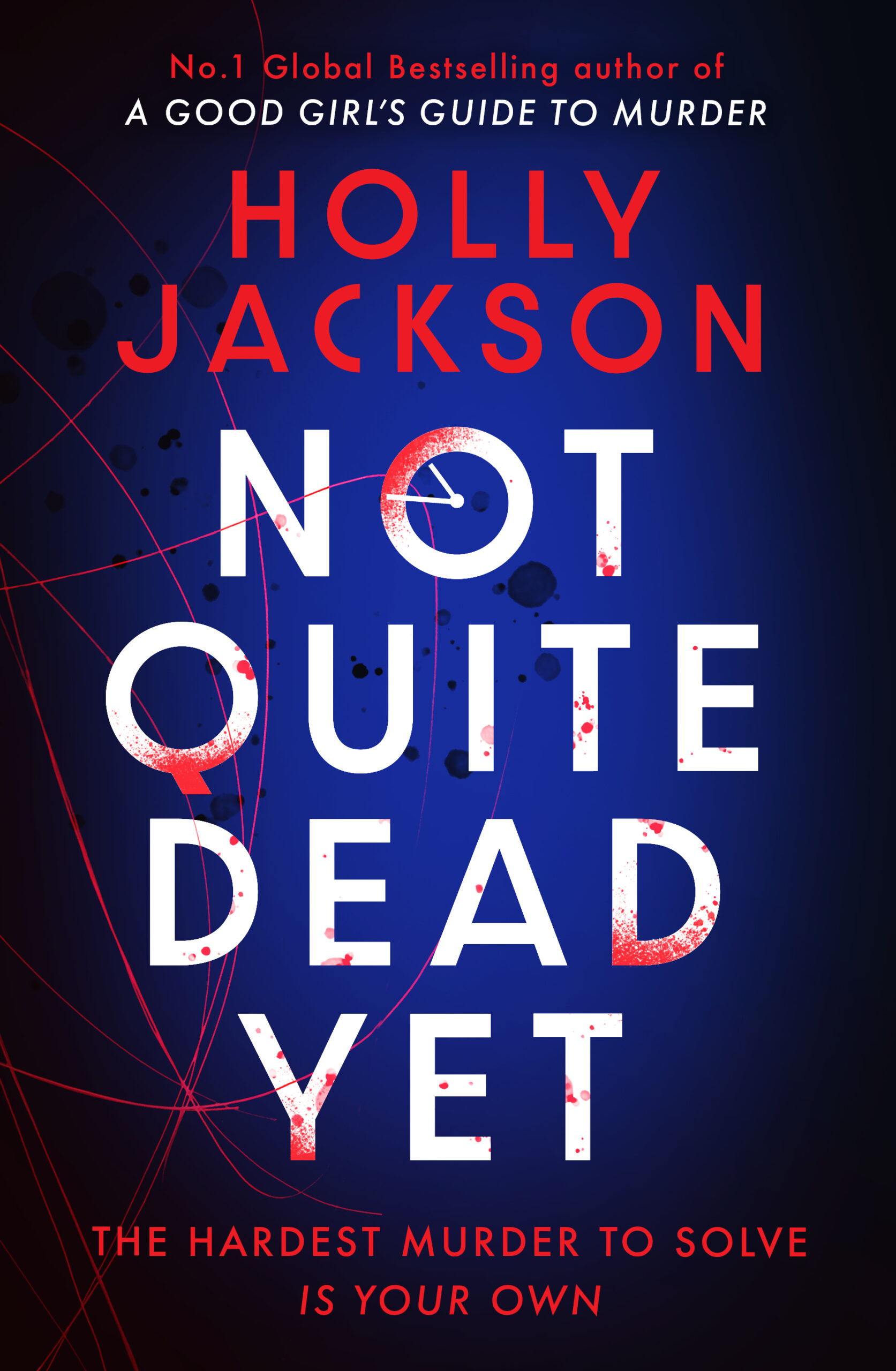
Author: Holly Jackson
Genre: Young Adult Thriller / Mystery
Ideal For: Readers who love fast-paced, high-stakes mysteries with sharp twists, morally complex characters, and a ticking-clock premise that doesn’t let you breathe. Perfect for fans of dark, clever YA thrillers that feel cinematic, emotionally grounded, and ruthlessly smart.
Plot Summary (Spoiler-Free)
From its opening pages, Not Quite Dead Yet announces itself as a different kind of thriller. There’s no gentle buildup, no slow introduction to the mystery. The central crime has already happened. The danger is immediate. The clock is already running.
Holly Jackson wastes no time pulling the reader into a nightmare scenario: a teenage girl who knows she has been attacked, who knows she is dying, and who has only a limited window to uncover the truth before her body shuts down completely. This is not a story about whether she’ll survive. It’s a story about what she’ll do before she doesn’t.
What follows is a relentless, razor-sharp mystery that proves Jackson remains one of the most effective voices in contemporary YA thrillers. Not Quite Dead Yet is bold, propulsive, and emotionally charged—combining high-concept tension with character-driven stakes in a way few authors manage consistently.
A Premise That Feels Immediately Dangerous
The brilliance of Not Quite Dead Yet lies in its premise: the protagonist has been poisoned with a substance that will kill her slowly, unpredictably, and without a guaranteed antidote. Doctors can’t tell her how long she has—hours, days, maybe a week. There is no dramatic collapse, no countdown timer on a screen. Just the creeping knowledge that time is running out.
Jackson understands that uncertainty is far more terrifying than certainty. The protagonist isn’t racing toward a fixed deadline—she’s racing against her own failing body, against symptoms that could spike at any moment, against memory gaps and physical limitations that worsen as the story progresses.
This turns every scene into a risk. Every conversation costs energy. Every decision matters. The tension never lets up because survival is never stable.
A Protagonist Powered by Fear, Anger, and Ruthless Clarity
Jackson excels at writing protagonists who think fast, feel deeply, and refuse to collapse under pressure. Here, she delivers one of her most compelling leads yet.
This is not a passive victim or a wide-eyed amateur detective. The protagonist is terrified, furious, and painfully aware that politeness and hesitation are luxuries she no longer has. Her inner monologue crackles with urgency, dark humour, and brutal honesty. She knows people will lie to her. She knows time will run out. And she knows she has nothing left to lose.
What makes her so compelling is her emotional realism. She doesn’t become superhuman because of the crisis. She makes mistakes. She lashes out. She doubts herself. But she also becomes frighteningly focused—cutting through social niceties, asking the questions no one wants to answer, and pushing past fear because stopping would be worse.
This is survival as clarity, not heroism.
The Mystery: Tight, Twisty, and Merciless
Holly Jackson is known for intricate plotting, and Not Quite Dead Yet is no exception. The suspect list is smartly constructed, layered with believable motives, half-truths, and red herrings that never feel lazy or arbitrary.
What elevates this mystery is how intimately it’s tied to the protagonist’s physical decline. Clues are missed because of dizziness. Conversations are misremembered. Evidence is interpreted through a fog of pain, medication, and fear. The reader is constantly aware that the narrator’s reliability is slipping—not because she’s dishonest, but because her body is betraying her.
This creates a delicious, nerve-wracking uncertainty. You can’t trust everything you’re told—but you can’t dismiss it either. Jackson weaponises this instability, turning the investigation itself into a high-risk act.
The twists arrive at exactly the right moments—never too early, never too late. And when revelations come, they reframe not just the mystery, but the emotional landscape of the entire story.
Time as the Ultimate Antagonist
More than any single character, time is the villain of this novel.
Jackson structures the book to make time feel slippery and oppressive. Chapters move quickly. Scenes end abruptly. There’s a constant sense that something important has just been missed—or is about to be. The protagonist’s worsening condition creates a drumbeat of urgency that never fades into background tension.
What’s particularly effective is that Jackson resists the temptation to turn this into a simple countdown thriller. There is no neat progression from “fine” to “dying.” Instead, symptoms come and go unpredictably, mimicking the terrifying reality of poisoning and illness. This unpredictability keeps the reader as unsteady as the protagonist herself.
Emotional Stakes Beyond the Mystery
While the plot is razor-tight, Not Quite Dead Yet succeeds because it cares deeply about why the mystery matters.
As the protagonist confronts the possibility of her own death, the novel opens space for grief, regret, and reckoning. Relationships take on new weight. Old resentments feel suddenly pointless. Certain truths become impossible to ignore.
Jackson handles these emotional beats with restraint. There are no melodramatic monologues about mortality. Instead, emotion emerges in small, piercing moments—a text message unanswered, a memory resurfacing at the wrong time, the quiet terror of realising you may not get to fix everything you broke.
The book understands that impending death doesn’t make people noble. It makes them honest.
Writing Style: Sharp, Efficient, and Addictive
Jackson’s prose is clean and compulsively readable. She has an instinctive understanding of pacing, knowing when to linger on a moment and when to cut away hard. Dialogue is crisp and purposeful, often carrying double meanings as characters reveal more through what they avoid than what they say outright.
There’s also a streak of dark humour running through the narration—wry, self-aware, and never out of place. It acts as a pressure valve, allowing the reader to breathe just enough before the tension snaps tight again.
Importantly, the writing never talks down to its audience. Jackson trusts her readers to keep up with complex timelines, layered motives, and morally gray decisions. The result is a thriller that feels intelligent without being inaccessible.
Themes That Give the Story Weight
Beneath its gripping surface, Not Quite Dead Yet explores several resonant themes:
Control vs. Powerlessness
The protagonist’s battle is not just against a killer, but against the loss of agency over her own body. The novel asks what control really means when time and health are no longer guaranteed.
Truth Under Pressure
Jackson examines how people reveal who they are when the stakes are absolute. When there’s no time for politeness or denial, truth becomes unavoidable.
What We Owe Each Other
As relationships are tested under extreme circumstances, the book interrogates loyalty, guilt, and the limits of forgiveness. Not everyone deserves closure—and not everyone gets it.
Survival as Defiance
Even as the title suggests uncertainty, the novel treats survival not as hope, but as resistance. The act of searching for the truth becomes an assertion of worth: my life matters enough to fight for answers.
The Ending: Earned, Satisfying, and Bold
Without revealing spoilers, the ending of Not Quite Dead Yet is exactly what it needs to be: decisive, emotionally grounded, and thematically coherent.
Jackson avoids the trap of a twist-for-twist’s-sake finale. Instead, she delivers an ending that resolves the mystery while honoring the psychological and emotional journey that led there. The final revelations feel shocking yet inevitable—the best possible combination.
Importantly, the conclusion doesn’t cheapen the story’s tension by undoing its stakes. Consequences remain. Choices matter. The title’s ambiguity lingers in a way that feels intentional and powerful.
Why This Is a Five-Star Book
- A killer high-concept premise executed flawlessly
- A protagonist who feels raw, intelligent, and unforgettable
- Relentless pacing without sacrificing emotional depth
- A mystery that rewards close attention and critical thinking
- Themes that elevate the thriller into something lasting
Not Quite Dead Yet earns its five stars because it understands that great thrillers aren’t just about solving crimes—they’re about confronting fear, truth, and time itself.
Final Thoughts
Holly Jackson has proven once again that she knows exactly how to grip a reader and refuse to let go. Not Quite Dead Yet is tense, emotionally rich, and brutally efficient—a novel that respects its audience and dares to put its protagonist through the worst imaginable scenario without flinching.
This is a book you’ll race through, heart pounding, only to find yourself thinking about it long after you finish. It’s a thriller that understands urgency not as spectacle, but as lived experience.
Few novels make you feel time slipping away this vividly. Even fewer make you care this much while it happens.