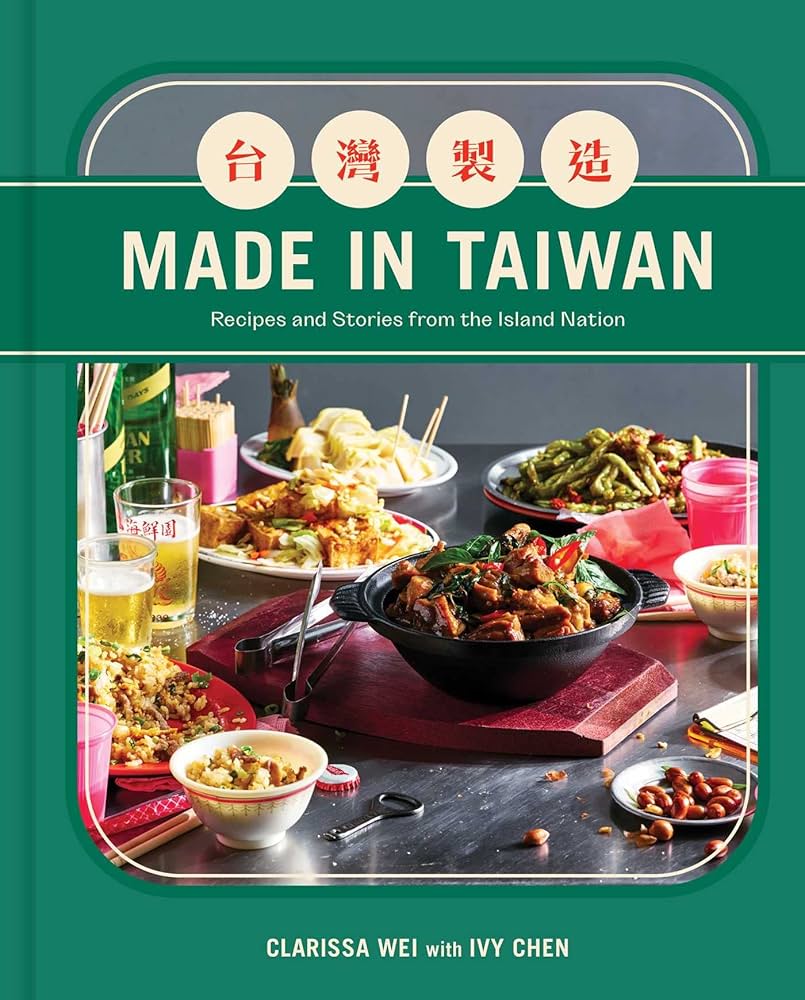
★★★★★
Author: Clarissa Wei
Genre: Food Writing / Cultural History / Memoir
Ideal For: Readers who love food as a gateway to culture, identity, and history. Perfect for anyone interested in Taiwan, Asian diaspora stories, culinary memoirs, and books that blend reportage with deep personal reflection.
Introduction
Made in Taiwan is not just a book about food. It is a book about belonging, memory, migration, and what it means to claim an identity that has long been misunderstood, overlooked, or flattened by outsiders. Clarissa Wei uses food as her language, but what she is really writing about is Taiwan itself — not as a political talking point or a footnote to another nation’s history, but as a living, breathing place with its own voice.
From the very first pages, Made in Taiwan establishes its ambition clearly: this is a reclamation. Wei sets out to document Taiwanese food culture on its own terms, correcting decades of mislabeling that have lumped Taiwanese cuisine under broader “Chinese food” narratives. Yet the book never feels defensive or academic. Instead, it unfolds with warmth, curiosity, and deep emotional intelligence, drawing readers in through street stalls, family kitchens, night markets, and personal memories.
This is a book that understands that food is never just sustenance. It is inheritance. It is survival. It is resistance.
Clarissa Wei’s Voice: Curious, Grounded, and Generous
Wei writes with the confidence of a seasoned food journalist and the vulnerability of someone tracing her own roots. Her voice is inviting and precise — she knows when to linger on a detail and when to step back to let the history speak. There is no pretension here, no performative authority. Instead, she approaches every dish, every interview, and every memory with respect.
What makes her writing so effective is her ability to hold multiple lenses at once. She is at once the Taiwanese American child navigating questions of identity, the professional critic documenting flavors and techniques, and the cultural historian connecting food to colonialism, migration, and politics. These roles never clash; they enrich each other.
Wei is also refreshingly honest about her own learning process. She doesn’t present herself as someone who already knows everything. Instead, she allows the book to be shaped by discovery — by conversations with chefs, elders, farmers, and street vendors whose lives are inseparable from the food they make. That humility gives the book its emotional resonance.
Food as History, Not Trend
One of the book’s greatest strengths is its refusal to treat Taiwanese food as a trend. In an era when Asian cuisines are often filtered through social media aesthetics or fusion marketing, Made in Taiwan insists on context. Wei carefully traces how Taiwan’s food culture emerged from layers of Indigenous traditions, Dutch and Japanese colonisation, Han migration, post-war displacement, and American influence.
Dishes like beef noodle soup, oyster omelets, lu rou fan, and shaved ice are not just described — they are explained. Wei explores why they exist, who made them first, and how their meanings have shifted over time. She shows how Japanese colonial infrastructure shaped modern Taiwanese dining habits, how war and scarcity influenced flavours, and how night markets became democratic spaces where culture is shared, debated, and reinvented nightly.
This historical grounding gives the book weight. You come away understanding that Taiwanese food is not static or “authentic” in a rigid sense. It is dynamic, adaptive, and deeply tied to the island’s complicated past.
Identity, Diaspora, and the Question of “Where Are You From?”
Running parallel to the culinary exploration is Wei’s own story as a Taiwanese American navigating identity in a world that often collapses nuance. She writes with clarity about the frustration of seeing Taiwanese food mislabeled, Taiwanese identity erased, and Taiwan itself treated as an afterthought.
These moments are some of the most powerful in the book. Wei doesn’t dramatize them, but she doesn’t soften them either. She captures the quiet exhaustion of constantly explaining where you’re from — and why that answer is never simple. Food becomes both refuge and battleground: a place where identity is preserved, but also where it is often misunderstood.
For readers from diaspora backgrounds, these sections will feel deeply familiar. For others, they offer an empathetic entry point into conversations about representation, naming, and cultural autonomy.
The People Behind the Food
Made in Taiwan shines brightest when Wei centers people rather than dishes. She profiles chefs, aunties, night market vendors, and food producers with care, allowing their voices to shape the narrative. These are not celebrity-driven portraits; they are grounded, human stories about craft, labor, and pride.
Wei understands that food culture survives because of individuals who show up every day — waking before dawn to prepare broth, folding dumplings by hand, tending farms, or perfecting recipes passed down through generations. She honors these lives without romanticising them.
What emerges is a portrait of Taiwan that feels intimate and textured. The island comes alive not as a destination, but as a community — one built through repetition, care, and shared meals.
A Book That Educates Without Preaching
Despite its political implications, Made in Taiwan never lectures. Wei is meticulous with facts, but she trusts readers to draw their own conclusions. She explains Taiwan’s contested international status, its complex relationship with China, and its internal diversity without reducing these issues to slogans.
Food becomes a subtle but powerful way to discuss sovereignty and self-definition. When a dish is mislabeled, something deeper is being denied. When Taiwanese food is recognized on its own terms, it becomes an act of acknowledgment.
This approach makes the book accessible even to readers unfamiliar with Taiwan’s history. You don’t need prior knowledge to engage with the material — Wei builds understanding gradually, organically, through stories and meals.
Structure and Pacing: Thoughtful and Immersive
The book’s structure mirrors its themes. It moves fluidly between personal narrative, historical analysis, and food writing, never lingering too long in one mode. Each chapter feels purposeful, contributing another layer to the larger picture.
Wei’s pacing is particularly effective. She allows space for reflection without losing momentum, balancing introspective passages with concrete details. You can read the book slowly, savoring each chapter, or in longer stretches, pulled forward by curiosity and emotional investment.
The result is a reading experience that feels immersive rather than overwhelming.
Why This Book Feels Necessary Right Now
Made in Taiwan arrives at a moment when conversations about cultural ownership, representation, and diaspora are more urgent than ever. But what makes the book special is that it doesn’t chase relevance — it earns it.
By grounding these conversations in food, Wei makes them tangible. She reminds us that culture is lived daily, not debated abstractly. A bowl of noodles can carry centuries of history. A night market can be a site of resilience. A recipe can be a declaration of identity.
This book also expands the canon of food writing. It sits comfortably alongside works by writers like Anthony Bourdain and M.F.K. Fisher, but it brings something distinct: an insistence that food writing can be both personal and political without sacrificing pleasure.
Who This Book Is For
This is a book for food lovers, but also for readers who care about history, identity, and storytelling. It’s for those curious about Taiwan beyond headlines. It’s for diaspora readers seeking recognition. And it’s for anyone who believes that understanding a culture begins at the table.
Even readers who don’t cook or consider themselves “food people” will find something here — because at its core, Made in Taiwan is about people, memory, and the human need to be seen.
Why It Earns Five Stars
Made in Taiwan earns its five-star rating because it succeeds on every level. It is informative without being dry, personal without being insular, political without being polemical. Clarissa Wei writes with authority and empathy, crafting a book that feels both deeply researched and deeply felt.
This is a book that changes how you see food — not just Taiwanese food, but food as a cultural force. It sharpens your awareness, expands your vocabulary, and leaves you more attentive to the stories behind what you eat.
Most importantly, it gives Taiwan the space it deserves — not as a footnote, not as a trend, but as a place with its own rich, complex culinary identity.
Final Thoughts
Made in Taiwan is a triumph of modern food writing. It is a love letter, a correction, and an invitation — to taste more thoughtfully, to listen more closely, and to name things properly.
Clarissa Wei has written a book that feels both intimate and expansive, grounded in bowls of soup and centuries of history. You close it not just hungry, but changed — carrying a deeper understanding of how food can hold memory, resistance, and belonging all at once.
This is not just a book you read. It’s a book you carry with you.