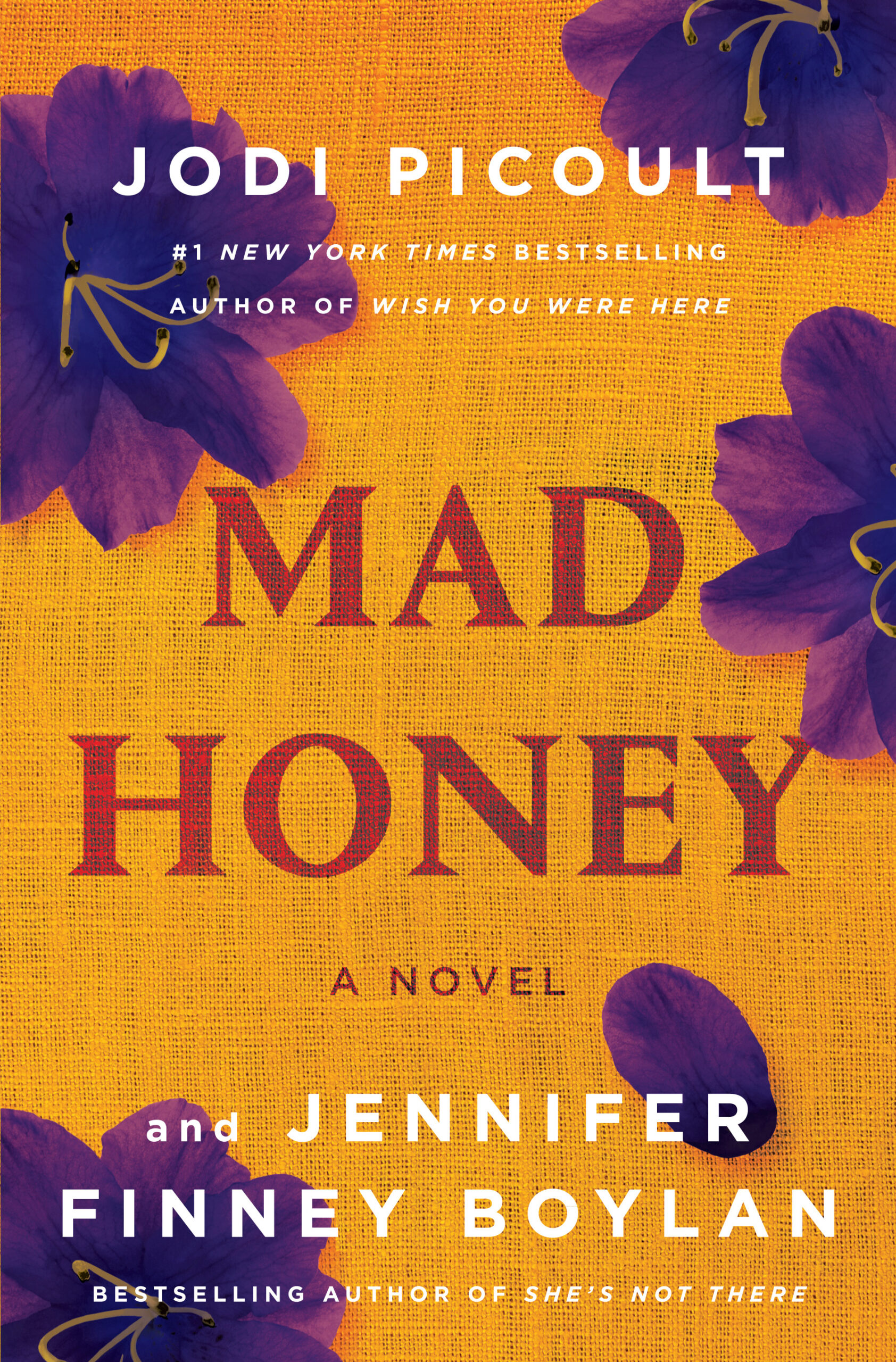
Authors: Jodi Picoult and Jennifer Finney Boylan
Genre: Contemporary Fiction / Legal Drama / Psychological Mystery
Ideal For: Readers who crave emotionally charged stories that combine suspense, empathy, and social consciousness. Perfect for fans of character-driven fiction that challenges assumptions and breaks your heart in equal measure.
Plot Summary (Spoiler-Free)
Mad Honey opens in a small New Hampshire town where everything looks peaceful — until tragedy strikes. Olivia McAfee, a single mother and beekeeper, is trying to rebuild her life after fleeing an abusive marriage. Her son, Asher, is her entire world: kind, smart, and loving. But when Asher’s girlfriend, Lily Campanello, is found dead, Olivia’s world collapses again — this time under the suspicion that her son might be responsible.
From that moment, the novel unfolds in two interwoven timelines and perspectives — Olivia’s in the present, and Lily’s in the past — each revealing secrets, love, and the slow, painful unraveling of trust.
Jodi Picoult, known for her mastery of moral complexity, joins forces with Jennifer Finney Boylan, an acclaimed memoirist and transgender advocate, to create a story that’s part courtroom drama, part family saga, and part exploration of identity. But above all, Mad Honey is about what it means to truly love someone — not the perfect version of them, but the flawed, fragile, utterly human one.
A Story Told in Two Voices
The brilliance of Mad Honey lies in its dual narrative. Olivia’s chapters — reflective, maternal, and quietly fierce — contrast with Lily’s voice, which is vibrant, searching, and achingly tender.
Olivia’s sections draw readers into the slow dread of a mother facing the possibility that her child might be a killer. She questions everything she thought she knew about Asher, and in the process, herself. Her work as a beekeeper becomes more than a profession; it’s a metaphor for control and chaos, sweetness and danger, nature’s calm disguising its ferocity.
Lily’s chapters, in contrast, are luminous and heartbreaking. Through her, we learn not only about young love but about self-discovery and survival. Lily’s life is marked by trauma and reinvention, but her voice never wavers from authenticity. She’s bright and hopeful, even as she hides a truth that becomes the novel’s emotional fulcrum.
The two voices intertwine to create a rhythm that’s both suspenseful and deeply intimate — one searching for answers, the other revealing them slowly, painfully, and beautifully.
The Themes: Love, Identity, and the Hidden Histories of Every Life
At its core, Mad Honey is a meditation on truth — the kind we tell others and the kind we hide from ourselves. But within that frame, Picoult and Boylan explore multiple layers of modern life with rare sensitivity and depth.
1. Motherhood and Protection
Olivia’s chapters are a raw exploration of maternal love — its strength, its blindness, its contradictions. She’s a woman who has endured abuse and built a new life, only to have her past resurface in her son’s behavior. Through her, the book asks: how much of ourselves do we pass on to our children? And how do we forgive ourselves when they inherit our pain?
2. Gender, Identity, and Selfhood
Lily’s story brings a rare and essential perspective to contemporary fiction. Without sensationalism, the novel explores what it means to live authentically in a world that can be cruelly unkind to those who are different. Her journey is not framed as tragedy but as triumph — the everyday heroism of being oneself despite fear.
Boylan’s influence shines here; the portrayal of Lily’s transgender identity is handled with nuance, compassion, and lived truth. Her chapters invite readers to listen, not judge — to understand that identity is not a plot twist but a lived experience.
3. Secrets and the Cost of Silence
Both Olivia and Lily live behind walls of secrecy, built for safety but maintained out of fear. The novel shows how secrets can protect but also poison, how silence can both preserve and destroy. In a culture obsessed with appearances, Mad Honey argues that truth — however painful — is the only path to genuine love.
4. Love and Violence
The title itself is a metaphor. Mad honey, derived from certain rhododendron nectars, is both intoxicating and toxic. The authors use this symbol throughout to explore love’s dual nature — how it can nourish or destroy depending on how it’s wielded. The novel asks difficult questions: When does love turn possessive? How do we recognise emotional harm before it becomes physical?
Olivia’s reflection on her abusive marriage and Asher’s romantic intensity draw uncomfortable parallels, forcing both her and the reader to confront uncomfortable truths about the patterns we inherit and repeat.
The Writing: Lyrical, Suspenseful, and Emotionally Exact
Jodi Picoult’s prose is characteristically sharp — precise in emotion, deliberate in pacing, and deeply cinematic. Each scene feels alive, filled with sensory detail. You can almost smell the honey and smoke, feel the cold courtroom air, hear the soft hum of bees in the background of Olivia’s grief.
Jennifer Finney Boylan’s influence adds warmth and lyricism, especially in Lily’s chapters. Her writing is delicate yet fierce, blending vulnerability with resilience. Together, their voices create a seamless narrative — two authors writing as one, in perfect harmony.
The courtroom scenes are taut and brilliantly written. Every testimony, every objection, and every flicker of doubt feels real. But it’s the quiet scenes — Olivia inspecting her hives, Lily playing cello, Asher cooking breakfast — that give the novel its soul.
Picoult and Boylan understand that suspense doesn’t come only from plot twists. It comes from empathy — the unbearable tension of caring deeply about people who might be broken beyond repair.
The Structure: A Slow Unfolding of Truth
The novel’s structure mirrors its themes. It begins like a mystery — a death, a suspect, a courtroom — but gradually deepens into something more intimate and emotional.
The timeline alternates between the present-day trial and Lily’s past, inching toward the truth of what happened on the day she died. The pacing is deliberate — slow enough to savor, but tight enough to keep you reading long past midnight.
Each revelation feels earned, not forced. When the truth finally emerges, it’s shocking not because it’s sensational, but because it’s human. It forces every character, and the reader, to confront their own biases about love, gender, and morality.
Symbolism: Bees, Honey, and the Wildness of Love
The title isn’t just poetic — it’s central to the novel’s meaning. Olivia’s beekeeping becomes a rich metaphor for control, motherhood, and nature’s delicate balance.
Bees, like humans, are social creatures with strict hierarchies, rules, and dangers. The hives are both sanctuary and battlefield, much like the homes the novel depicts. Honey represents sweetness — the reward of hard work and harmony — while “mad honey” embodies danger hidden within beauty.
Through these symbols, the book suggests that love, like honey, is both nourishment and risk — something we consume knowing it can heal or hurt us.
Character Depth: No Villains, Only People
One of the novel’s greatest strengths is its refusal to flatten anyone into archetype. Every character, even those who make unforgivable choices, is given empathy and dimension.
Olivia isn’t just a victim of abuse; she’s also complicit in small denials and silences that shaped her son. Asher isn’t simply innocent or guilty — he’s a teenager navigating inherited trauma and emotional confusion. And Lily, though gone for most of the narrative, remains the most vivid of all — her voice echoing in every memory and revelation.
Picoult and Boylan remind readers that human beings are neither wholly good nor evil. We are messy, frightened, yearning creatures trying to love and be loved, often clumsily.
Why It Deserves Five Stars
Emotional Honesty: Every page feels lived and true. The pain isn’t dramatised — it’s rendered quietly, devastatingly, with respect for real experience.
Social Relevance: The book tackles gender identity, domestic violence, and legal injustice with compassion and precision, never using them as mere plot devices.
Narrative Craft: The dual perspectives and slow reveals make for a reading experience that’s as suspenseful as it is emotionally rich.
Moral Complexity: No easy answers, no simple heroes — just humanity in all its contradictions.
Writing Quality: Beautiful prose, layered metaphors, and dialogue that rings with authenticity.
It’s rare for a novel to be both a page-turner and a meditation on empathy, but Mad Honey achieves exactly that.
The Ending: Bittersweet and Redemptive
Without giving away spoilers, the ending of Mad Honey is everything you want it to be: devastating, enlightening, and strangely hopeful. It doesn’t tie every thread neatly — instead, it honors life’s ambiguity.
Olivia’s final reckoning with truth and love feels earned. The novel ends not in despair but in acceptance — a recognition that love, real love, survives even when everything else breaks. It may wound us, deceive us, and challenge us, but it is also the force that heals and defines us.
Final Thoughts: A Triumph of Empathy and Storytelling
Mad Honey is Jodi Picoult at her finest — fearless in theme, tender in execution, and emotionally transcendent. It’s also enriched by Jennifer Finney Boylan’s voice, which adds a layer of authenticity and grace rare in contemporary fiction.
This isn’t just a story about a murder trial; it’s about truth — personal, political, and emotional. It’s about how we define love, how we fail one another, and how we find the courage to begin again.
It will make you think about gender and justice. It will make you cry for the things unsaid between mothers and children. It will remind you how fragile and fierce love can be.
And perhaps most of all, it will leave you changed — softer, more alert, and more compassionate than before you turned the first page.