Author: Ann Liang
Genre: Contemporary YA / Magical Realism / Coming-of-Age
Ideal For: Readers who love sharp, emotionally intelligent stories about ambition, class, invisibility, and belonging. Perfect for fans of quiet magical realism, morally grey heroines, and books that say uncomfortable things with elegance rather than drama.
A Story About Invisibility — Literal, Social, and Emotional
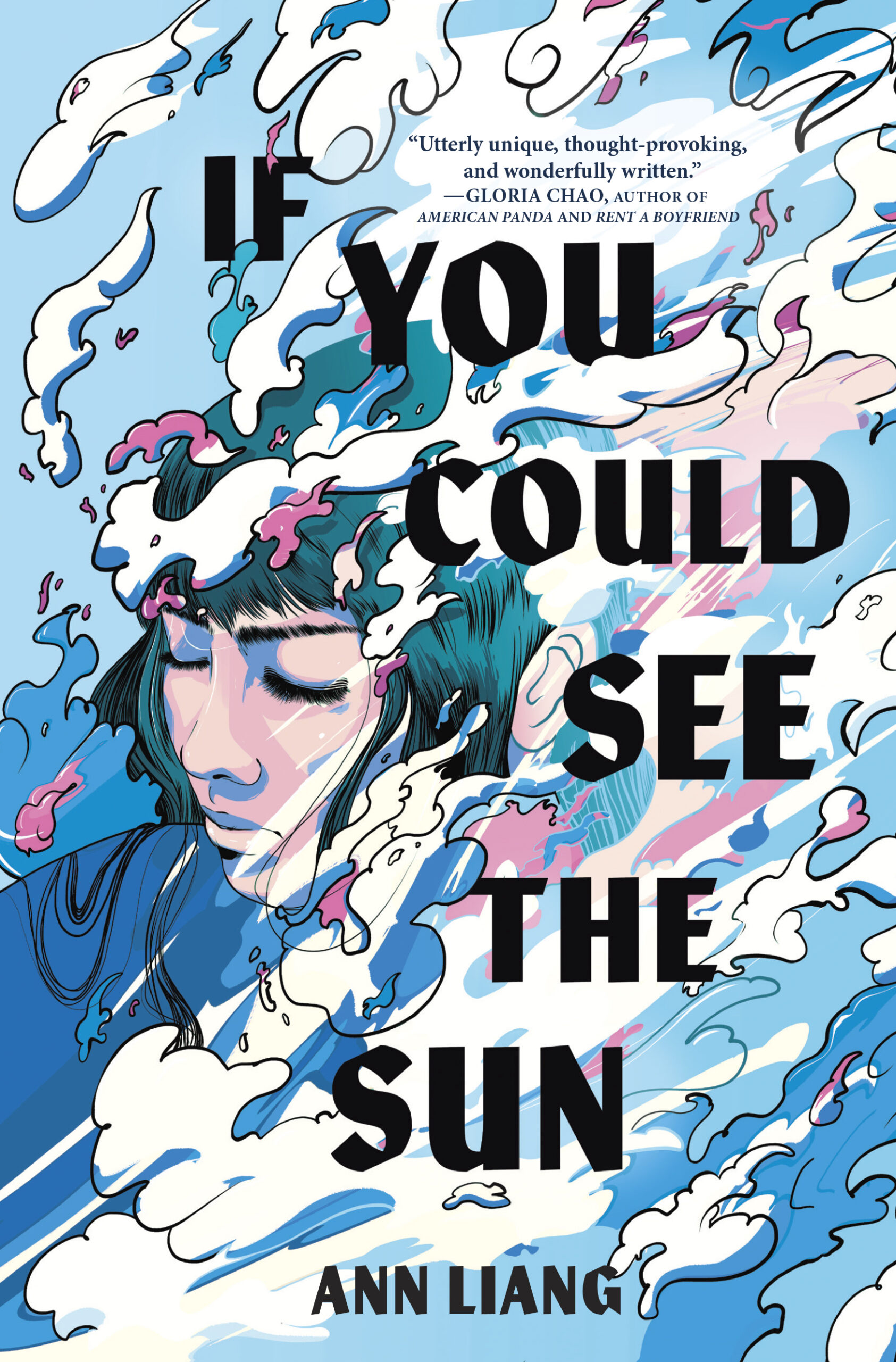
If You Could See the Sun is one of those rare novels that feels deceptively light on the surface, yet lingers long after you’ve closed the book. Ann Liang takes a fantastical premise — a girl who begins to turn invisible — and uses it not as spectacle, but as metaphor. What unfolds is a piercing, intimate story about power, privilege, self-worth, and the cost of trying to belong in spaces that were never designed for you.
This is not a book about becoming special. It’s a book about what happens when you already feel unseen — and the world confirms it.
Plot Summary (Spoiler-free)
Alice Sun is a scholarship student at an elite Beijing international school, surrounded by wealth, entitlement, and effortless confidence she doesn’t possess. She’s brilliant, hardworking, and perpetually anxious about money — the kind of student who knows that one misstep could cost her everything. Her place at the school feels conditional, fragile, and temporary.
Then one day, Alice begins to turn invisible.
At first, it’s accidental. Fleeting. A strange glitch in reality. But soon, it becomes clear that this invisibility is tied to her emotional state — triggered by stress, insecurity, and the feeling of being overlooked. Instead of panic, Alice does something far more interesting: she adapts.
If the world already treats her as invisible, why not use it?
What follows is a clever, unsettling escalation: Alice starts taking on anonymous paid “missions” for her wealthy classmates — retrieving secrets, exposing truths, and doing the things they’re too afraid to do themselves. Each task brings her money, leverage, and a sense of control she’s never had before. But it also pushes her further away from who she thought she was.
Ann Liang’s Writing: Quietly Razor-Sharp
Ann Liang’s prose is understated but precise. She doesn’t overexplain emotions or spell out themes; she trusts the reader to notice the tension simmering beneath every interaction. Her writing mirrors Alice’s internal world — observant, restrained, constantly calculating.
What makes the book so effective is how normal it feels. Even with the magical element, the story remains grounded in everyday anxieties: tuition fees, social hierarchies, parental expectations, and the constant pressure to prove you deserve your seat at the table.
Liang has an exceptional grasp of pacing. The novel unfolds gradually, allowing Alice’s moral shifts to feel organic rather than sudden. You don’t notice the turning point until you’re already past it — just like Alice herself.
Alice Sun: A Brilliantly Complicated Protagonist
Alice is not written to be universally likable — and that’s precisely why she works so well.
She’s intelligent, guarded, and deeply pragmatic. She doesn’t dream of changing the world; she wants security. Safety. Survival. Her choices are often uncomfortable, occasionally selfish, and always understandable. You may not agree with her decisions, but you’ll recognize the logic behind them.
What makes Alice compelling is her self-awareness. She knows when she’s crossing lines. She knows when she’s exploiting a system that has already exploited her. And she knows that once you start turning yourself into a tool, it’s hard to stop.
Her invisibility doesn’t grant her freedom — it sharpens her awareness of how power operates. She sees how secrets function as currency. How silence can be weaponised. How visibility is often reserved for those who already have everything.
This is a protagonist shaped not by fantasy, but by reality.
The Magic as Metaphor — Done Right
The invisibility in If You Could See the Sun is one of the most effective uses of magical realism in recent YA fiction. It’s never treated as a superpower in the traditional sense. There are no epic battles, no training montages, no clear rules to master.
Instead, the magic is emotional.
Alice disappears when she feels small. When she feels replaceable. When the pressure of expectation becomes too much. The more she suppresses herself — her needs, her anger, her fear — the more her body reflects that erasure.
And when she starts asserting control through her secret missions, the invisibility becomes more reliable, more deliberate — raising unsettling questions about what she’s trading away in the process.
Liang uses this device to explore class disparity in a way that feels fresh and incisive. Alice’s classmates have money, connections, and safety nets. Alice has intelligence — and now, invisibility. The contrast is brutal and painfully real.
Themes That Hit Hard
Class and Survival
At its core, this is a story about class. About what it means to exist in elite spaces without wealth, without backup, without the luxury of failure. Alice’s choices are shaped by financial precarity, and the book never moralised that reality.
Liang shows how systems reward those who can afford to take risks — and punish those who can’t.
Visibility and Worth
Who gets seen? Who gets listened to? Who gets forgiven?
Alice’s invisibility forces readers to confront how often people like her are overlooked in real life — not because they lack talent, but because they lack power.
Moral Compromise
The novel doesn’t present a clean arc of corruption or redemption. Instead, it explores moral drift — how small justifications accumulate, how survival logic can eclipse empathy, and how easy it is to rationalise harm when the system already feels unjust.
Identity and Self-Erasure
Alice’s greatest conflict isn’t external — it’s internal. As she becomes more effective, more in control, she also becomes less emotionally present. The book asks a difficult question: if becoming invisible helps you survive, what does becoming visible cost?
The Romance: Subtle, Tense, and Purposeful
The romantic subplot — particularly Alice’s dynamic with Henry — is handled with restraint and nuance. It’s not a distraction from the main narrative; it’s a reflection of it.
Henry represents possibility: connection, honesty, vulnerability. But intimacy is risky when your entire survival strategy depends on secrecy. The tension between wanting to be known and needing to remain hidden is where the romance truly lives.
Liang resists easy resolutions here, which makes the emotional payoff far more satisfying.
Pacing and Structure: Controlled and Confident
The novel is tightly structured, with each “mission” escalating both the stakes and Alice’s internal conflict. The middle section, where Alice becomes more entrenched in her role, is particularly strong — uncomfortable, compelling, and impossible to rush through.
The ending doesn’t offer simplistic closure. Instead, it gives something better: clarity. Alice’s journey concludes in a way that feels honest to the themes of the book — acknowledging both loss and growth without pretending that everything can be neatly undone.
Why This Book Deserves Five Stars
If You Could See the Sun earns its five-star rating not because it’s flashy or dramatic, but because it’s thoughtful, precise, and emotionally resonant.
It trusts its readers.
It respects complexity.
It refuses easy answers.
Ann Liang has written a story that speaks directly to a generation navigating invisible pressures — academic, financial, social — and does so without preaching or pandering. The book understands that ambition and insecurity often coexist, that survival sometimes looks like selfishness, and that becoming visible isn’t always safe.
Who This Book Is For
This book will resonate deeply if you’ve ever:
- Felt like you had to earn your place every single day
- Navigated elite spaces without the privilege that surrounds them
- Been praised for being “low maintenance” or “quiet” when you were actually struggling
- Wondered whether success is worth the version of yourself it requires
Final Thoughts: A Quietly Devastating Triumph
If You Could See the Sun is one of those books that doesn’t shout for attention — it waits for you to notice it. And once you do, it doesn’t let go.
It’s a coming-of-age story without sentimentality, a magical realism novel without spectacle, and a social critique delivered with surgical calm. Ann Liang has written a debut that feels both timely and timeless — a story about invisibility that makes readers feel profoundly seen.
This isn’t just a five-star YA novel.
It’s a book that understands how the world actually works — and asks whether we can survive it without disappearing ourselves.