Author: Kevin Kwan
Genre: Contemporary Fiction / Satire / Romance
Ideal for: Readers who enjoy glamorous escapism, family drama, and biting social satire with a distinctly Asian flavour.
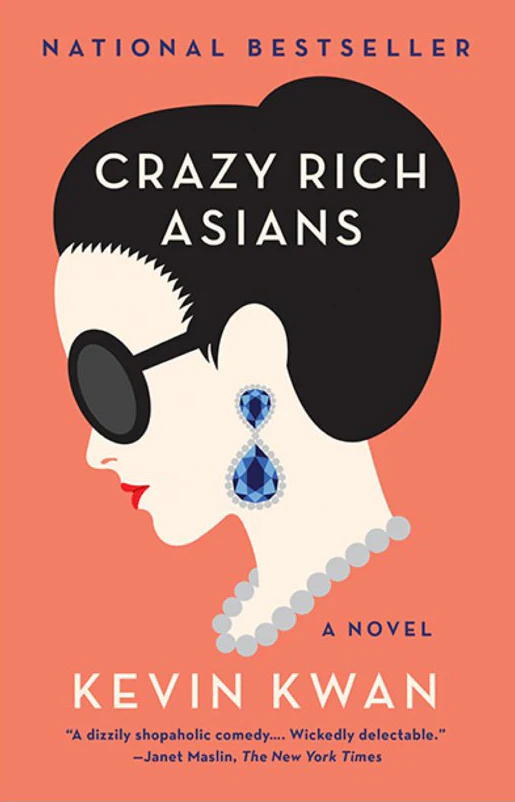
Few books have exploded onto the literary scene quite like Crazy Rich Asians. When Kevin Kwan’s debut novel was first published in 2013, it became an instant sensation—praised for its dazzling portrayal of Singapore’s ultra-wealthy elite and its sharp, often hilarious satire of wealth, power, and family expectations. It was a story that managed to feel both outrageous and intimate, a sparkling comedy of manners that doubled as a cultural deep dive.
Even now, years after its release (and the global success of its film adaptation), Crazy Rich Asians remains a must-read for anyone interested in contemporary Asian literature, romantic comedies with a twist, or simply stories that take you into a world most of us could never dream of inhabiting. But while it’s an immensely entertaining read, it’s not without its flaws—which is why I landed on four stars instead of five.
Plot Summary (Spoiler-Free)
At the heart of the story is Rachel Chu, a Chinese-American economics professor living in New York. When her boyfriend, Nicholas Young, invites her to spend the summer with his family in Singapore, she expects something simple—a chance to meet the parents and explore his hometown.
What Rachel doesn’t know is that Nick isn’t just anyone. He’s the heir to one of the richest and most powerful families in Asia. When she arrives, she finds herself thrust into a world of unimaginable opulence: private jets, couture gowns, palatial mansions, and weddings that look like something out of a royal fantasy.
But with wealth comes scrutiny, and Rachel quickly becomes the target of gossip, jealousy, and outright hostility. Nick’s family—especially his formidable mother, Eleanor Young—does not approve of her. What unfolds is a mix of romance, comedy, and biting satire as Rachel navigates this glittering yet treacherous social landscape.
What Makes It Shine
Kevin Kwan’s greatest triumph is world-building. The novel immerses readers in the extravagant lifestyles of Singapore’s elite in a way that feels both immersive and voyeuristic. From lavish parties to the minutiae of high fashion and real estate, Kwan spares no detail. He even includes cheeky footnotes to explain cultural nuances and luxury brand references, which give the book an added layer of wit.
The satire is razor-sharp. Kwan doesn’t just glorify wealth—he skewers it, exposing the vanity, pettiness, and absurdity of excess. Some scenes are laugh-out-loud funny, while others are jaw-dropping in their extravagance. It’s escapism, but it’s also a critique of the very thing it portrays.
And then there’s Rachel. As an outsider, she becomes the perfect lens for readers. We experience the overwhelming glamour through her eyes, but we also share her discomfort at the coldness, snobbery, and elitism she encounters. Her love story with Nick grounds the novel, giving it a human center amidst the excess.
Themes That Resonate
1. Wealth and Identity
The novel asks what happens when money defines your identity. For the Youngs, wealth isn’t just a status symbol—it’s a birthright, a responsibility, and a burden. For Rachel, who comes from a middle-class background, wealth is alien and unsettling. The clash between these perspectives drives much of the drama.
2. Family Expectations vs. Individual Desires
Eleanor Young is the perfect embodiment of the traditional matriarch who prioritises family reputation above all else. Her disapproval of Rachel isn’t personal—it’s cultural, social, and deeply rooted in the values of preserving wealth and bloodlines. Nick, caught in the middle, must choose between loyalty to his family and love for Rachel.
3. Cultural Dualities
As a Chinese-American, Rachel represents the diaspora experience. She may look like she belongs, but her upbringing sets her apart. Kwan deftly highlights the differences between Asian-born elites and Westernised Chinese, offering insights into how culture, class, and geography intersect.
Why Not Five Stars?
While Crazy Rich Asians is wildly entertaining, it isn’t flawless. At times, the sheer amount of detail—brand names, food descriptions, real estate minutiae—can feel overwhelming. It adds authenticity, but it also slows the pacing. Readers who aren’t as invested in high fashion or luxury labels may find themselves skimming.
Additionally, some characters verge on caricature. While satire often exaggerates, there are moments when the villains of the story feel almost too over-the-top. Eleanor Young, for example, is a fascinating character, but her motivations could have been explored with a bit more nuance.
Finally, the novel juggles a sprawling cast of characters, and while this makes for a rich tapestry, it occasionally dilutes the focus from Rachel and Nick’s relationship, which is supposed to be the emotional core.
Who Should Read This Book?
- Fans of satire and social comedy, especially those who loved Jane Austen or Edith Wharton but want a modern, Asian twist.
- Romance readers looking for a love story complicated by family drama and cultural expectations.
- Anyone curious about Singapore—while exaggerated, the book offers a vivid and often hilarious glimpse into its high society.
- Readers in need of escapism, because few novels whisk you away quite like this one.
What Stays With You
What lingers after finishing Crazy Rich Asians isn’t just the wealth or glamour—it’s the question of what truly matters. Rachel, despite being surrounded by unimaginable luxury, never loses sight of her values. In contrast, many of the so-called “crazy rich” characters reveal the emptiness behind their wealth.
Kwan seems to suggest that while money can buy privilege and power, it cannot buy integrity, kindness, or love. And that’s where the heart of the story lies.
Final Thoughts
Crazy Rich Asians is, above all, fun. It’s witty, stylish, and over-the-top in the best possible way. But beneath the glitter, it also offers sharp commentary on family, culture, and the cost of wealth. Kevin Kwan manages to create a story that feels both like a fairytale and a critique of the very world it portrays.
For me, this was a highly enjoyable read—though not a perfect one. The pacing issues and occasional character shallowness keep it from being a five-star masterpiece, but it’s still an unforgettable novel that has left a lasting mark on contemporary fiction.
Four stars, enthusiastically awarded. And if you finish this one, the sequels (China Rich Girlfriend and Rich People Problems) are ready to take you even deeper into the glittering madness.
Highly recommended if you liked:
- Pride and Prejudice by Jane Austen (for its comedy of manners)
- The Devil Wears Prada by Lauren Weisberger (for the obsession with fashion and power)
- Sex and Vanity by Kevin Kwan (for more of his signature blend of satire and style)