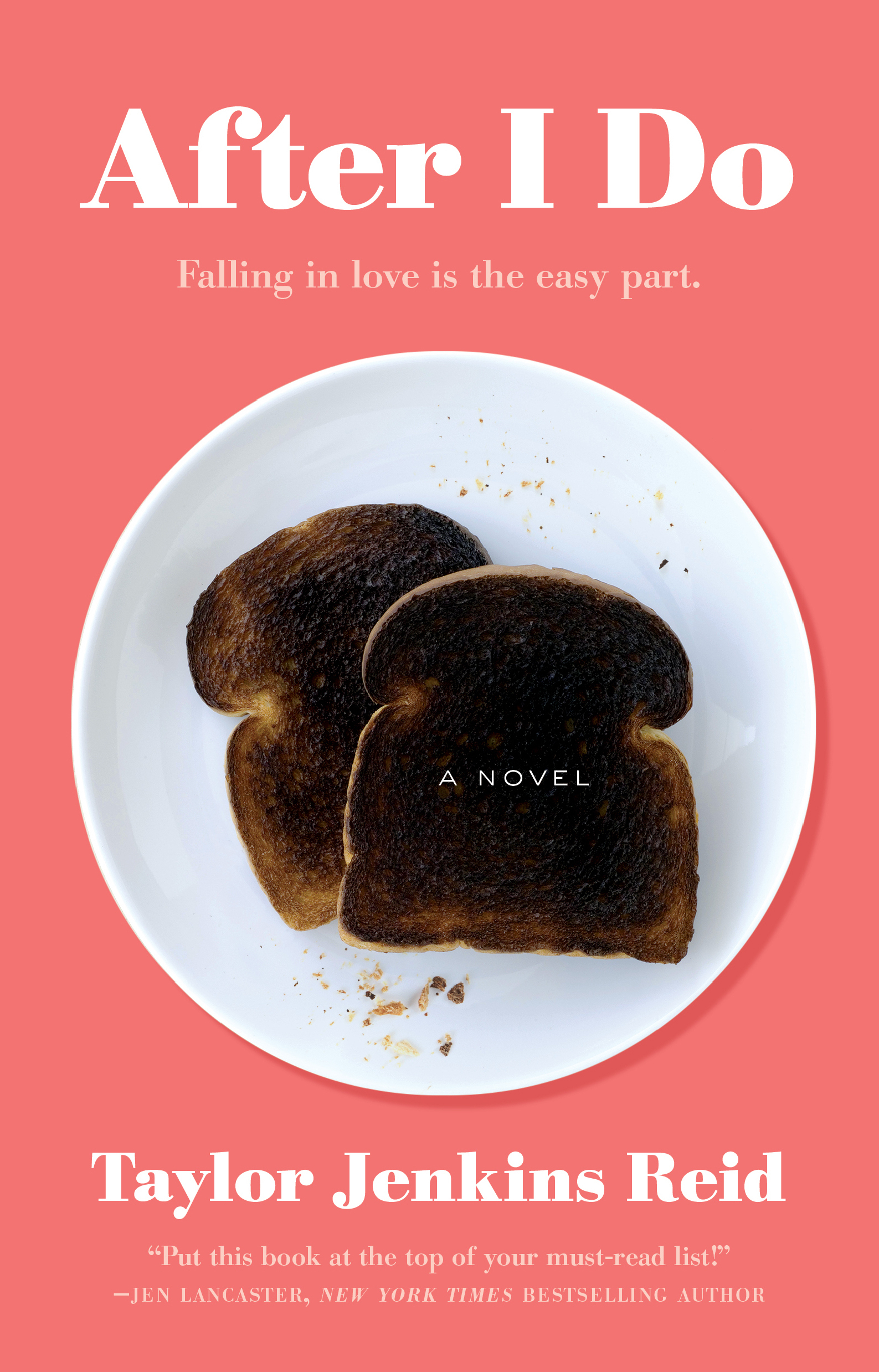
Author: Taylor Jenkins Reid
Genre: Contemporary Fiction / Relationship Drama
Ideal For: Readers who appreciate emotionally intelligent stories about marriage, long-term love, and the quiet moments that determine whether relationships endure or dissolve. Perfect for fans of thoughtful, realistic fiction that explores love beyond the honeymoon phase.
Plot Summary (Spoiler-Free)
After I Do is not a novel about falling in love. It’s about what happens after the falling — after the vows, after the routines, after the small compromises quietly stack up into resentment. In this early but deeply resonant novel, Taylor Jenkins Reid turns her attention to marriage not as a fairy-tale ending, but as an evolving, fragile contract between two imperfect people.
Lauren and Ryan have been married for years. They’re not dramatic, not toxic, not broken in any obvious way. They’re just… tired. Tired of the same arguments. Tired of feeling misunderstood. Tired of loving each other but not liking each other very much anymore. So they make a radical decision: they’ll take a one-year break. No contact. No rules about dating. After the year ends, they’ll decide whether to divorce or recommit.
What follows is not a sensational story about betrayal or explosive conflict. Instead, After I Do unfolds as a quiet, deeply observant meditation on what love looks like when it’s stripped of habit — and whether distance can clarify what proximity has blurred.
Taylor Jenkins Reid’s Strength: Emotional Honesty Over Drama
One of Reid’s greatest strengths as a writer — and it’s already clear here — is her refusal to sensationalise emotional pain. There are no villains in After I Do. There’s no single moment that “breaks” the marriage. Instead, the book captures something far more realistic and unsettling: how love can erode slowly, not because of cruelty, but because of neglect, misunderstanding, and unspoken needs.
Lauren’s voice is intimate, reflective, and raw without being melodramatic. She isn’t trying to justify herself to the reader — she’s trying to understand herself. Reid writes Lauren’s internal monologue with a clarity that feels almost confessional, as though we’re reading thoughts Lauren hasn’t even fully admitted to herself yet.
This is a novel that trusts its readers to sit with discomfort. Reid doesn’t rush toward solutions or moral lessons. She lets the questions linger:
Can love survive distance?
Is staying always braver than leaving?
What do we owe the people we’ve promised our lives to — and what do we owe ourselves?
The Year Apart: Space as Revelation
The structure of the novel is deceptively simple. We follow Lauren through the year she spends apart from Ryan — back in her childhood home, reconnecting with old friends, navigating dating, and confronting parts of herself she’s ignored for years.
What’s striking is how restrained Reid is in depicting this separation. There’s no romantic montage of freedom. Dating isn’t liberating — it’s awkward, hollow, sometimes affirming, sometimes lonely. Being single again doesn’t magically restore Lauren’s sense of self. Instead, it reveals how much of her identity was shaped by being someone’s wife.
Reid is particularly perceptive in showing how time apart doesn’t automatically fix a relationship. Growth is not guaranteed. Reflection is not painless. And clarity doesn’t always arrive when you want it to.
Lauren’s year isn’t about finding someone better than Ryan. It’s about understanding who she is without him — and whether the person she becomes is someone who still wants to choose the marriage.
Marriage as a Living, Breathing Thing
What elevates After I Do above many contemporary relationship novels is its insistence that marriage is not a static achievement but an ongoing negotiation. Reid portrays love as something that must be actively practiced — not just felt.
Lauren and Ryan’s problems are not rooted in lack of affection, but in mismatched communication styles, unaddressed expectations, and unresolved resentments. Reid captures the small, corrosive moments that married readers will recognise immediately: the argument that isn’t about the argument, the silence that lasts too long, the feeling of being alone while sharing a bed.
Importantly, the novel never suggests that love alone is enough. Nor does it argue that effort guarantees success. Instead, it presents marriage as a choice that must be renewed — or consciously released.
The Supporting Cast: Mirrors, Not Distractions
The supporting characters in After I Do are thoughtfully deployed, never overshadowing the central relationship but enriching it through contrast.
Lauren’s parents, whose marriage has weathered decades, offer one model of commitment — imperfect, occasionally frustrating, but enduring. Her friendships, both old and new, highlight the ways people grow apart not out of malice but inertia. Each interaction serves as a mirror, reflecting different versions of what a long-term partnership can look like.
Even the romantic interests Lauren encounters during her year apart are written with restraint. They are not temptations meant to sway the plot, but experiences meant to clarify what Lauren values — and what she misses.
The Writing: Clean, Intimate, and Unpretentious
Reid’s prose in After I Do is deceptively simple. There’s no ornamentation for its own sake. Sentences are clean, direct, emotionally precise. But beneath that simplicity lies deep observational skill.
She has a gift for articulating feelings readers recognise but rarely see expressed so clearly: the guilt of wanting space from someone you love, the fear of choosing wrong no matter what you decide, the strange grief of missing a life that technically still exists.
Dialogue is natural and unforced, particularly between Lauren and Ryan. Their conversations feel lived-in, shaped by years of shared history and unresolved tension. Reid avoids theatrical confrontations in favor of quieter moments that carry more weight.
What Makes This a Five-Star Read
Emotional Authenticity
After I Do feels true in a way that’s rare. It doesn’t offer easy answers or dramatic catharsis — it offers recognition.
Mature Exploration of Marriage
This is a novel about long-term love, not infatuation. It respects the complexity of adult relationships.
Strong, Introspective Protagonist
Lauren is flawed, self-aware, uncertain — and deeply human.
Restraint and Confidence in Storytelling
Reid trusts the emotional arc enough not to over-explain or over-dramatise.
A Thoughtful, Earned Ending
Without revealing spoilers, the resolution feels emotionally honest rather than narratively convenient.
The Ending: Honest, Not Idealised
One of the most admirable aspects of After I Do is its ending. Reid resists the urge to provide a neat, romantic conclusion. Instead, she offers something far more satisfying: a resolution rooted in self-knowledge and choice.
The final chapters don’t frame love as destiny or obligation. They frame it as intention. Whatever readers may hope for going in, the ending delivers emotional coherence rather than fantasy — and that choice elevates the entire novel.
It’s the kind of ending that invites reflection rather than applause. One that makes you think about your own relationships, your own silences, your own unfinished conversations.
Why After I Do Still Matters
Although published earlier in Reid’s career, After I Do feels increasingly relevant. In an era where relationships are often reduced to labels, red flags, and ultimatums, this novel insists on nuance. It reminds us that most relationships don’t end in explosions — they fade, strain, stretch, and require conscious effort to survive.
It also speaks to the courage it takes to pause rather than flee, to examine rather than escape. Lauren’s decision to step away from her marriage is not framed as selfish or brave — it’s framed as necessary. And that moral neutrality is one of the book’s greatest strengths.
Final Thoughts: Quietly Devastating, Deeply Human
After I Do is not a loud book. It doesn’t shout its wisdom or dramatise its pain. Instead, it sits with you — gently, persistently — asking questions you may not want to answer.
Taylor Jenkins Reid proves here that she understands relationships not as plot devices, but as emotional ecosystems. She writes love not as a feeling that happens to us, but as a decision we make — again and again, or not at all.
This is a novel for readers who appreciate emotional realism, who understand that sometimes the hardest part of love isn’t leaving — it’s choosing to stay with open eyes.