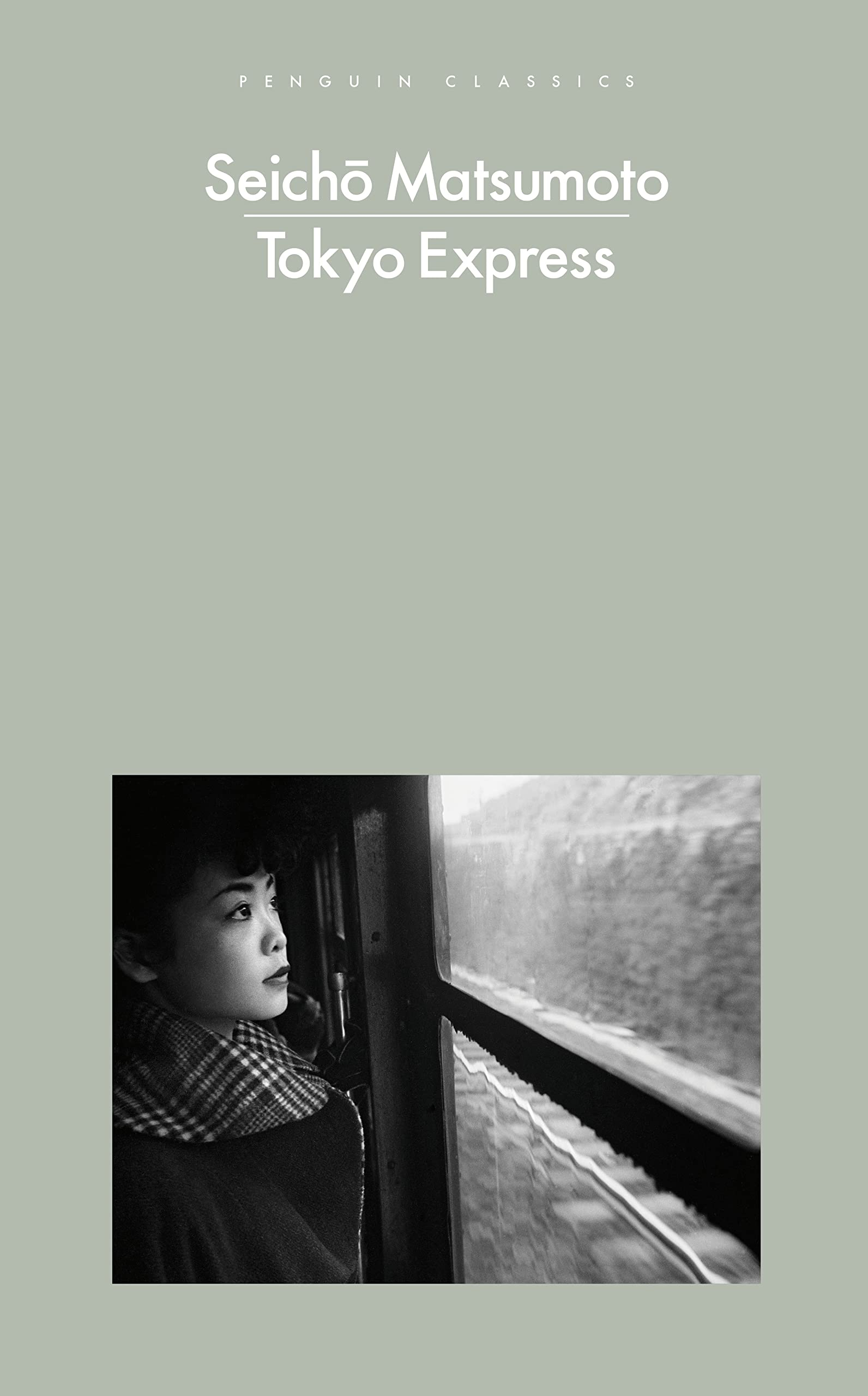
Author: Seichō Matsumoto (translated by Jesse Kirkwood)
Genre: Crime / Detective Mystery / Japanese Classic
Ideal For: Readers who savour sharp puzzles, meticulously plotted intrigue, and the quiet tension of a thriller that privileges deduction over explosions. If you’ve admired the precision of Golden-Age mysteries and yearn for something set in a different cultural and historical frame—this is your ride.
Plot Summary (Spoiler-free)
From the moment Tokyo Express opens, you are plunged into Japan’s late-1950s world: two bodies washed up on a wintry beach, apparently a lovers’ suicide. But veteran detective Torigai and young Tokyo investigator Mihara aren’t convinced. What initially seems simple blossoms into a layered investigation of trains, timetables, alibis, and high-level corruption. Using railway logs, ferry schedules and travel precision—every “line” connects to a hidden “point”—Matsumoto constructs a mystery that is as much about modern life in post-war Japan as it is about deceit and murder.
The title itself suggests movement—express trains, moving bodies, shifting truths. The novel’s translation into English revitalises the work, delivering what one reviewer calls “a masterpiece of its kind”.
Matsumoto’s Style: Lean, Relentless, Unflashy Genius
There are no glamorous detectives with flashing badges. There are no showy twists without groundwork. Instead, Matsumoto writes with a staccato rhythm of question-and-answer, alibi-and-check. One reviewer notes the work as “a novel of timetables and alibis … the old-fashioned repeated, grey work of questioning people … no flashy technique”.
The translation retains crispness. The pacing may feel slower to modern readers, but that is part of the charm—each train departure, each station transfer becomes clue. Reviews highlight how no detail is extraneous.
Themes That Stay With You
Precision & Order vs. Chaos & Corruption. Matsumoto uses the exactness of Japan’s railway system to test the lies of his suspects. The alibi that depends on a train schedule is both brilliant and chilling.
Modernity’s Shadow. Japan’s rapid post-war evolution—factories, rail lines, bureaucracy—forms the background. This isn’t a quaint village puzzle; it’s a country shifting. The detectives’ job is to navigate that shift.
Justice in the Ordinary. There’s no grand speech, no dramatic confession. The unraveling is procedural, patient, human. It’s the un-glamorous work of finding truth.
The Weight of Time. The movement of trains echoes the movement of life—post-war angst, the fleetingness of alibis, the idea that time can both expose and obscure.
What Works Exceptionally Well
Eva-grade plotting. The way Matsumoto builds the case from timetable to final reveal is elegant and satisfying.
Setting as character. Post-war Japan, the cold beach, the train lobby, the bureaucratic offices—they all breathe in this novel.
Dual protagonists. Torigai and Mihara offer contrast—experience vs. youthful energy—and together they embody the investigation’s heart.
Short and sharp. At ~150 pages, the novel delivers without filler. The reading is lean and potent.
A Minor Quibble (More Style than Flaw)
Some readers might find the pace slower than contemporary thrillers—especially given the heavy focus on schedules and logic. One reviewer mentioned the first half “too slow and repetitive”.
Also, because the culprit may be evident early, the intrigue shifts from who did it to how they did it. If you prefer shocking reversals, this may feel more subtle—but no less rewarding.
Why You’ll Carry This Book With You
Once you shut the cover on Tokyo Express, the scene of the beach, the hum of the express train, the rustle of a schedule card will echo. You’ll think about how truth sometimes rides the rails. You’ll remember the moment where you realised: yes, it was an alibi built on emptiness. The reading lingers—not just as a puzzle solved, but as a portrait of a world on motion, of time measured in minutes and mistakes measured in seconds.
Tokyo Express deserves its five stars because it merges the classic detective puzzle with cultural depth, structural precision and psychological resonance. Seichō Matsumoto has crafted more than a mystery—it’s an inquiry into order, memory and movement. For any reader ready to slow down, lean into details and enjoy the quiet thrill of truth caught in the track, this is absolutely one to read.