Author: Matt Haig
Genre: Contemporary Fiction / Philosophical Fiction
Ideal for: Readers who enjoy thought-provoking, heartfelt stories about meaning, healing, and second chances
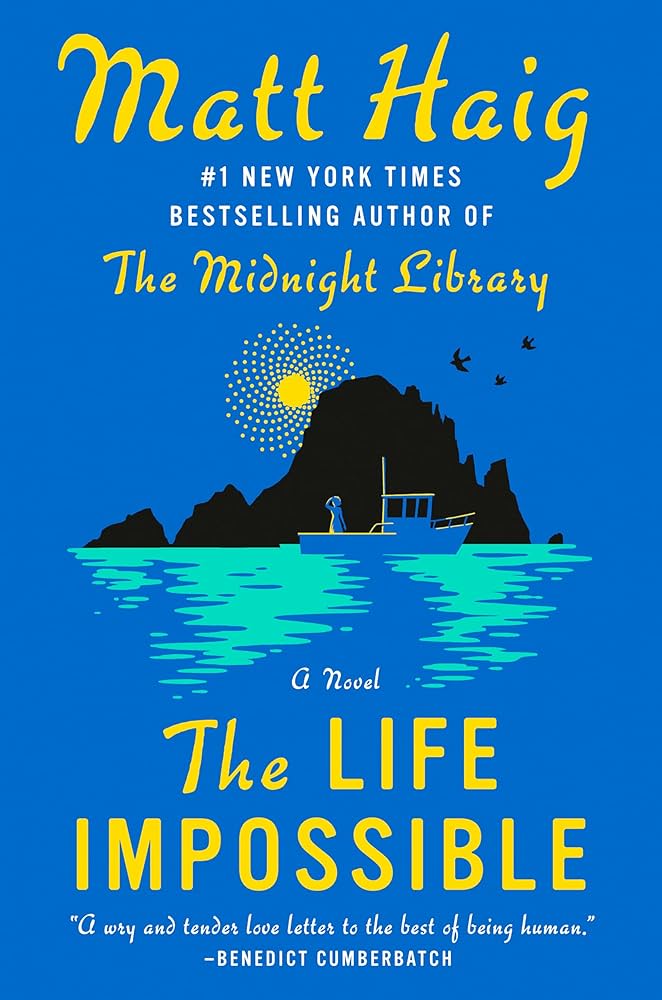
Matt Haig has always had a gift for writing books that meet you exactly where you are. Whether he’s exploring the depths of depression in Reasons to Stay Alive, or imagining infinite lives in The Midnight Library, Haig writes with a rare blend of honesty, tenderness, and hope. In The Life Impossible, he once again delivers a story that feels both deeply personal and universally resonant—a meditation on mortality, purpose, and what it means to truly live.
This is not just a novel. It’s a quiet, luminous journey that invites readers to pause, breathe, and reconsider how they’re spending their own lives. Haig doesn’t just tell us a story—he holds up a mirror and asks us to look closely.
What the Book Is About
At the center of The Life Impossible is Grace Winters, a woman whose life has been marked by grief and disconnection. Reeling from personal loss and the suffocating routine of survival, she feels like she’s merely existing rather than living. In a moment of near-collapse, she retreats to an old house on a remote Mediterranean island—half seeking solitude, half searching for something she can’t yet name.
What she finds there is not just an escape, but an awakening. The island, with its rich history, eccentric residents, and luminous natural beauty, becomes both sanctuary and crucible. Grace encounters strangers who carry their own burdens, yet who remind her that connection and kindness are still possible. Through her time on the island, she begins to see life not as a straight line leading only to death, but as something cyclical, expansive, and filled with moments worth savouring.
The plot itself is simple—quiet days, slow conversations, small revelations—but in Haig’s hands, simplicity becomes extraordinary.
Why It Resonates
We live in a world obsessed with productivity and busyness. Too often, “living” means running from task to task, achievement to achievement, without pausing to notice what really matters. The Life Impossible cuts through this noise with an almost radical gentleness.
Grace’s story resonates because it’s familiar. Who hasn’t felt stuck, disconnected, or weighed down by grief or routine? Haig captures these feelings with such honesty that you find yourself nodding in recognition. But then, slowly, he leads you toward a different way of seeing. Life doesn’t have to be measured by big achievements. It can be measured in moments of connection, in beauty noticed, in kindness given and received.
By the end, you don’t just feel moved—you feel a little lighter, as though Haig has handed you permission to breathe again.
A Style That Connects
Matt Haig’s prose is deceptively simple. He doesn’t overwhelm with flowery language or overly complex metaphors. Instead, he writes in clear, lyrical sentences that slip easily into your heart. His style mirrors the themes of the book: slowing down, stripping away excess, and noticing what matters.
He has a way of mixing philosophy with storytelling, of weaving big questions into small, intimate moments. One page you’ll be immersed in Grace’s quiet morning on the island; the next, you’ll stumble upon a line so profound it makes you put the book down just to think. That balance—between narrative and reflection—is what makes The Life Impossible so powerful.
More Than Just a Novel
On the surface, The Life Impossible is a story about one woman’s healing. But beneath that, it’s a meditation on universal truths:
That grief is not something to “get over,” but something to live with. That solitude can hurt, but also heal. That human connection—messy, imperfect, fleeting—is what makes life worth living. That there is beauty even in endings, because endings remind us to savor beginnings.
In many ways, the book feels like a companion to The Midnight Library. If that earlier novel was about exploring infinite possibilities, The Life Impossible is about learning to cherish the one life we do have.
Who Should Read This Book?
- Fans of literary and philosophical fiction who loved works like Paulo Coelho’s The Alchemist or Mitch Albom’s Tuesdays with Morrie.
- Readers going through grief, burnout, or major life transitions, who need a reminder that healing is possible.
- Anyone seeking inspiration, not through clichés or quick fixes, but through quiet wisdom and heartfelt storytelling.
- Longtime Matt Haig fans, who will recognise his signature mix of melancholy and hope.
In truth, this is a book for anyone who has ever asked themselves: Am I really living, or just existing?
What Sets It Apart
Plenty of novels try to teach us life lessons, but The Life Impossible never feels preachy or forced. Haig’s gift is in embedding philosophy within character and story. Grace’s journey doesn’t just illustrate ideas—it is the idea, lived out with all the messiness and contradictions of real life.
The setting, too, sets this book apart. The Mediterranean island isn’t just a backdrop; it’s a character in its own right. Haig writes about its landscapes, its food, its rhythms with such tenderness that you feel transported. It becomes a metaphor for life itself—beautiful, harsh, healing, and fleeting.
Highly recommended if you liked:
- The Midnight Library by Matt Haig
- The Alchemist by Paulo Coelho
- A Man Called Ove by Fredrik Backman
Final Thoughts
The Life Impossible is a book that lingers. Long after you’ve turned the last page, you’ll find yourself recalling Grace’s journey, Haig’s words, and the quiet lessons embedded in the story. It’s a reminder that life, with all its pain and imperfection, is still worth living.
Matt Haig has given us something rare: a novel that’s both profoundly moving and utterly accessible. It’s a book you’ll want to reread, to underline, to gift to friends who are struggling or simply in need of a gentle reminder that their life—however messy, however imperfect—is still theirs to embrace.
This isn’t just one of Haig’s best novels. It’s one of those books that belongs on the shelf of anyone who wants to live more fully, love more deeply, and see more clearly.
Five stars, without hesitation.