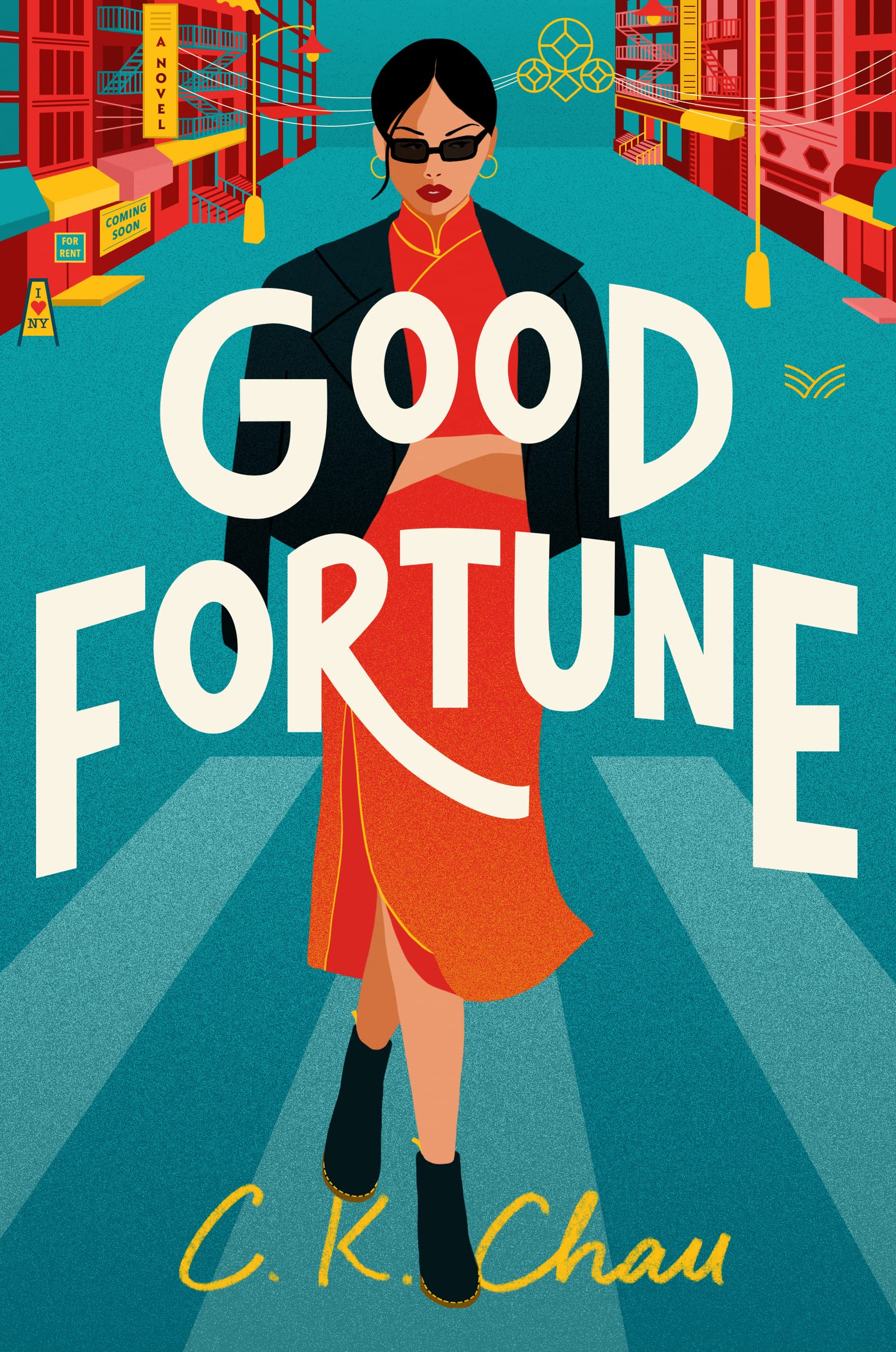
Author: C.K. Chau
Genre: Contemporary Fiction / Asian Diaspora / Workplace & Relationship Drama
Ideal For: Readers who love smart, socially observant fiction with emotional depth. Perfect for fans of stories about ambition, money, class, family expectations, and the complicated cost of “making it,” especially within Asian and Asian-diaspora contexts.
Plot Summary (Spoiler-Free)
Good Fortune is one of those rare novels that looks deceptively quiet on the surface but unfolds into something far more incisive, emotionally layered, and unsettling the longer you sit with it. At its core, this is a story about money — who has it, who doesn’t, and who is willing to bend themselves to get it. But beneath that is a far richer examination of identity, class mobility, race, power, and the invisible rules that govern success in modern life.
C.K. Chau writes with remarkable restraint and clarity, crafting a novel that never raises its voice yet lands every emotional and social blow with precision. Good Fortune is not flashy, nor is it sentimental. It is observant, intelligent, and quietly devastating — the kind of book that makes you recognise uncomfortable truths about the systems we live in and the compromises we normalise.
The Premise: A Job, a Relationship, a Moral Tightrope
The novel follows Thuy Nguyen, a young Vietnamese American woman working at a prestigious wealth-management firm in New York. She is competent, ambitious, and acutely aware that she exists on the margins of an elite world not built for people like her. Thuy has worked hard to get where she is, yet she knows that effort alone is never enough — perception, pedigree, and proximity to power matter just as much.
Enter Elijah, her boyfriend, who comes from a wealthy, well-connected background. Elijah is kind, charming, and generous in ways that blur the line between love and privilege. Through him, Thuy gains access to a lifestyle she has never known — private schools, financial security, and a social ease that money provides without announcing itself.
When Thuy’s job begins to entangle itself uncomfortably with Elijah’s family, the novel shifts from relationship drama into something sharper: a moral examination of what it means to succeed in a system that rewards silence, compliance, and selective blindness. Chau never frames Thuy as a villain or a hero. Instead, she presents her as deeply human — thoughtful, conflicted, and trying to survive without losing herself.
C.K. Chau’s Writing: Precise, Controlled, and Emotionally Exact
Chau’s prose is elegant in its restraint. She doesn’t over-explain emotions or dramatize conflict unnecessarily. Instead, she allows tension to accumulate through small moments — an overheard comment, an awkward pause in conversation, a choice not made.
This understated approach makes Good Fortune immensely powerful. The novel trusts the reader to notice what is left unsaid, to feel the discomfort of scenes where politeness masks exploitation, and to understand how power operates quietly, often invisibly.
The writing feels almost surgical in its precision. Chau dissects workplace dynamics, romantic intimacy, and family expectations with a clear eye and a steady hand. There is no indulgence here — every sentence earns its place.
A Deeply Honest Portrait of Class and Capitalism
One of the novel’s greatest strengths is how clearly it articulates class without turning it into caricature. Chau understands that wealth is not just money — it is confidence, access, and insulation from consequence.
Elijah’s world is not portrayed as overtly cruel. In fact, that’s what makes it so unsettling. His family’s wealth manifests as comfort, generosity, and opportunity — yet it also enables moral detachment. The novel shows how privilege allows people to avoid difficult questions, outsource responsibility, and remain insulated from the consequences of their actions.
Thuy, by contrast, exists in a constant state of calculation. She notices everything — tone shifts, expectations, micro-inequities. She understands that a single misstep could cost her far more than it would someone with a financial safety net. Chau captures this psychological burden with remarkable empathy.
Asian American Identity Without Stereotype
Good Fortune is also a nuanced and refreshing exploration of Asian American identity — one that avoids familiar tropes. Thuy’s relationship with her immigrant mother is neither overly sentimental nor cold. It is practical, layered, and shaped by unspoken expectations around sacrifice, success, and gratitude.
The novel explores how children of immigrants are often asked to embody “success” as proof that the sacrifices were worth it. Thuy’s career becomes not just a personal ambition but a symbolic one — a way to justify hardship, to demonstrate progress, to avoid disappointing those who came before her.
Yet Chau never reduces Thuy to a symbol. She is allowed to be tired, resentful, uncertain, and imperfect. The novel recognises that upward mobility is often emotionally expensive — and that success can come with a quiet sense of alienation.
Love, Power, and Unequal Ground
The relationship between Thuy and Elijah is one of the most compelling aspects of the book. Chau writes it with tenderness and realism, refusing to turn it into a simple metaphor or morality play.
Elijah genuinely cares about Thuy. He is not malicious, nor is he intentionally exploitative. And that’s precisely the problem. Their relationship exposes how inequality doesn’t require cruelty to function — it only requires imbalance.
Thuy is constantly negotiating gratitude, autonomy, and desire. Accepting help feels both comforting and destabilising. Love, in this context, is complicated by power — by who can afford to make mistakes and who cannot.
Chau doesn’t offer easy answers about whether love can exist without equality. Instead, she asks harder questions: What happens when affection is entangled with access? When generosity becomes expectation? When silence feels safer than honesty?
Workplace Fiction at Its Sharpest
The portrayal of Thuy’s workplace is chillingly accurate. Chau captures the culture of high-status professional environments with unflinching realism — the performative ethics, the careful language, the way institutions protect themselves first.
The novel explores how moral ambiguity becomes normalised in elite spaces, especially when profitability and reputation are at stake. Thuy’s internal struggle — whether to speak up, stay quiet, or compromise — mirrors dilemmas faced by countless people navigating corporate hierarchies.
What makes these scenes so effective is that Chau doesn’t dramatise them excessively. There are no explosive confrontations or grand speeches. Instead, there is pressure — subtle, sustained, and deeply uncomfortable.
A Quietly Devastating Emotional Arc
Good Fortune does not rely on plot twists or dramatic revelations. Its emotional impact comes from accumulation — the slow realisation that certain systems cannot be navigated without cost.
As Thuy becomes more successful, the question of what she is becoming grows louder. The novel resists the fantasy that self-awareness alone is enough to escape structural constraints. Knowing the system is flawed does not grant immunity from participating in it.
The ending is especially powerful in its restraint. Chau refuses neat resolutions. Instead, she offers something more honest: clarity without comfort, choice without certainty.
Why This Is a Five-Star Book
Good Fortune earns its five stars not because it is loud or dramatic, but because it is deeply truthful. It captures the emotional texture of ambition, class mobility, and moral compromise with rare insight.
This is a novel that respects its reader. It doesn’t tell you what to think — it shows you how things work, and then leaves you to sit with the implications.
It is also a book that feels urgently contemporary. In a world increasingly defined by inequality, branding, and performative ethics, Good Fortune asks essential questions about who benefits, who pays, and what success actually costs.
Final Thoughts: A Novel That Lingers
Good Fortune is the kind of book that grows more powerful after you finish it. You’ll find yourself thinking about Thuy’s choices, recognising similar dynamics in your own life, and questioning the stories we tell ourselves about merit, love, and fairness.
C.K. Chau has written an exceptional debut — one that announces her as a writer of clarity, courage, and profound empathy. This is not just a story about money. It is about belonging, silence, and the quiet negotiations we make every day to survive in systems that were never built with us in mind.
Good Fortune is an intelligent, restrained, and emotionally resonant novel about class, love, and the cost of success. Thoughtful, unsettling, and beautifully written, it is a book that deserves to be read slowly — and remembered long after the last page.