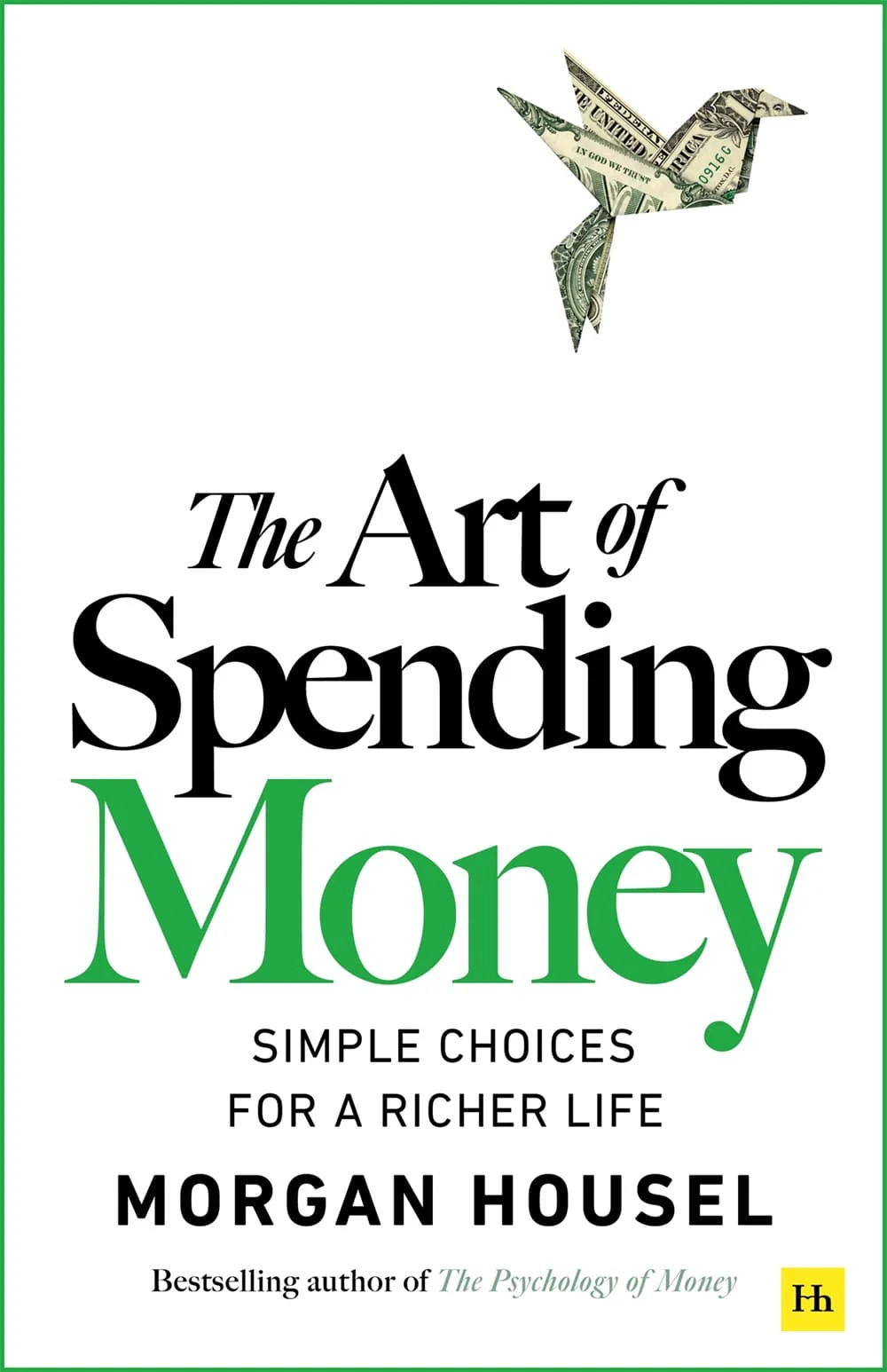
Author: Morgan Housel
Genre: Personal Finance / Behavioural Economics / Life Philosophy
Ideal For: Readers who love psychology-driven finance writing, fans of The Psychology of Money, and anyone looking for a deeper, more philosophical understanding of how spending shapes the way we live — and the way we feel.
Introduction
Morgan Housel has built a reputation for writing about money in a way that feels refreshingly humane. He doesn’t treat wealth like a scoreboard, nor finance like a game of formulas and charts. Instead, he treats money as something deeply emotional — an expression of values, priorities, fears, aspirations, and identity.
The Art of Spending Money continues this signature approach by shifting the spotlight. Rather than explaining how to accumulate wealth, Housel asks a deceptively difficult question: Once we have money to spend, how do we spend it well?
It’s a question that feels simple, but as Housel demonstrates, is actually one of the most complicated psychological puzzles of modern life.
This book is not a tactical guide filled with budgets or hacks. It’s a philosophical exploration of spending through stories — historical, personal, and societal. Housel’s argument is that spending isn’t a math problem; it’s a mirror. The money we let go of reflects the life we’re trying to build, consciously or not.
A Book Built on Stories, Not Strategies
What makes Housel’s work so appealing is his storytelling. He doesn’t lecture; he narrates. He doesn’t guilt-trip; he observes. And he never insists there is a “right” answer to spending — only thoughtful ways to examine what we want and why.
Throughout the book, he uses small, memorable stories to illustrate big ideas:
- Why people get happier not when they buy what they want, but when they spend in alignment with their values.
- Why chasing luxury often comes from insecurity rather than genuine joy.
- Why money spent on time, autonomy, and relationships yields more satisfaction than money spent on status.
Each chapter feels like a conversation: calm, insightful, grounded in psychological truth. Whether he’s discussing lottery winners, historical figures, or ordinary families, Housel weaves in a central message — we misunderstand spending because we misunderstand ourselves.
The Core Ideas: Spending as Identity, Emotion, and Legacy
Housel doesn’t present principles in list format, but the book revolves around several powerful themes that blend seamlessly through its stories.
1. Money is the most misunderstood storyteller in our lives.
Every purchase says something about the buyer — even if the buyer doesn’t know it. We often spend to feel safer, admired, included, respected, or less anxious. Spending exposes desires we rarely articulate.
Housel invites readers to step back and ask: What is my spending trying to say for me?
2. Good spending is spending that matches your internal compass — not external noise.
One of his strongest ideas is that “envy is the enemy of good spending.” We often measure our purchases not against our needs, but against the expectations of others. This leads to lifestyle inflation, burnout, financial stress, and dissatisfaction.
Good spending, he argues, aligns with your definition of a good life, not society’s.
3. Luxury is not inherently bad — but misunderstood.
Housel doesn’t shame luxury buyers. Instead, he shows how luxury can be joyful when it expresses genuine delight, not insecurity. The danger is mistaking luxury for identity. When luxury becomes a mask, spending loses meaning.
4. Time is the ultimate purchase.
One of the book’s most resonant ideas is that money should be used to buy freedom — the ability to say no, to choose how you spend your hours, to avoid stress that erodes life’s texture.
“Money buys happiness when it buys control of your time,” Housel suggests — and he makes a powerful case for why this is far more valuable than any material purchase.
5. Spending well requires knowing what enough means.
Enough is personal. Enough is flexible. Enough is emotional. Housel argues that without a sense of what enough looks like, spending becomes endless — a treadmill, not a destination.
This part of the book feels particularly relevant in an age where aspiration has no ceiling. Social media amplifies comparison, advertising amplifies desire, and capitalism offers infinite upgrades. Housel is inviting readers to step off the treadmill and define their own finish line.
Why This Book Resonates Emotionally
One of Housel’s strengths is understanding that money isn’t just practical — it’s intimate. It touches everything: family, relationships, mental health, self-image.
In The Art of Spending Money, he brings forward stories that reveal the emotional complexities behind how people use money:
- Parents overspending on children out of guilt or fear of inadequacy.
- Individuals sabotaging themselves because their spending habits were shaped by childhood trauma.
- High earners who remain trapped in lives they dislike because their expenses have become prisons.
- People who find joy in simplicity, proving that happiness scales with gratitude, not cost.
Housel’s message is gentle but impactful: Your relationship with money is inseparable from your relationship with yourself.
This insight alone makes the book worth reading.
The Writing: Clear, Elegant, and Thought-Provoking
Housel writes with clarity and elegance. His sentences are clean, the pacing smooth, and his ideas build slowly until they settle like truth. He doesn’t waste words, but he also doesn’t rush. You feel him guiding you, not pushing you.
His style is a blend of:
- Economic insight
- Psychological depth
- Poetic simplicity
- Gentle humor
Many of his lines feel like they belong in a journal — the kinds of reflections you return to because they reveal something new each time.
Why It’s a Four-Star Read (Not Five)
Despite its depth and wisdom, The Art of Spending Money falls just short of perfection for one reason: readers wanting more structured, step-by-step guidance may feel underfed.
The book is intentionally philosophical, not tactical. It won’t tell you:
- how to budget,
- what percentage of income to save,
- or how to create a personal spending plan.
Instead, it helps you understand why you spend and how to think about spending — not what to do with each dollar.
For readers expecting a more traditional finance book, this may feel too abstract. But for readers seeking a meaningful mindset shift, it’s a gem.
The Moments That Shine Brightest
Across its chapters, there are moments when Housel’s storytelling feels transcendent. He shares anecdotes that linger — stories about ordinary people making extraordinary realisations about life and money.
Some standout themes:
- The joy of modest pleasures
- The danger of status-based spending
- The peace that comes with financial boundaries
- The emotional cost of chasing admiration
- The dignity of choosing your own lifestyle
These moments give the book soul. They remind readers that money is not something to master, but something to understand.
A Book That Changes the Way You Look at Life
Ultimately, The Art of Spending Money succeeds because it reframes spending as a life choice — not a financial obligation. It challenges readers to think deeply about:
- what they value,
- who they are becoming,
- and how money can support a life of meaning rather than performance.
It’s rare for a finance book to feel both philosophical and practical, emotional and intellectual. Housel achieves this balance by writing not to teach formulas, but to illuminate truths.
Final Thoughts: A Smart, Heartfelt, Insightful Guide to a Better Relationship With Money
The Art of Spending Money isn’t just a book — it’s an invitation. An invitation to slow down, look inward, question assumptions, and design a life you actually want.
Housel’s storytelling is compelling, his insights enduring, and his ability to reveal the humanity behind spending is unmatched.
It may not offer tactical spreadsheets or financial formulas, but it provides something far more valuable: clarity. Clarity about what matters, what doesn’t, and how money can be used not to impress others, but to express yourself.
Housel proves once again that the most important financial lessons aren’t about numbers — they’re about human nature.