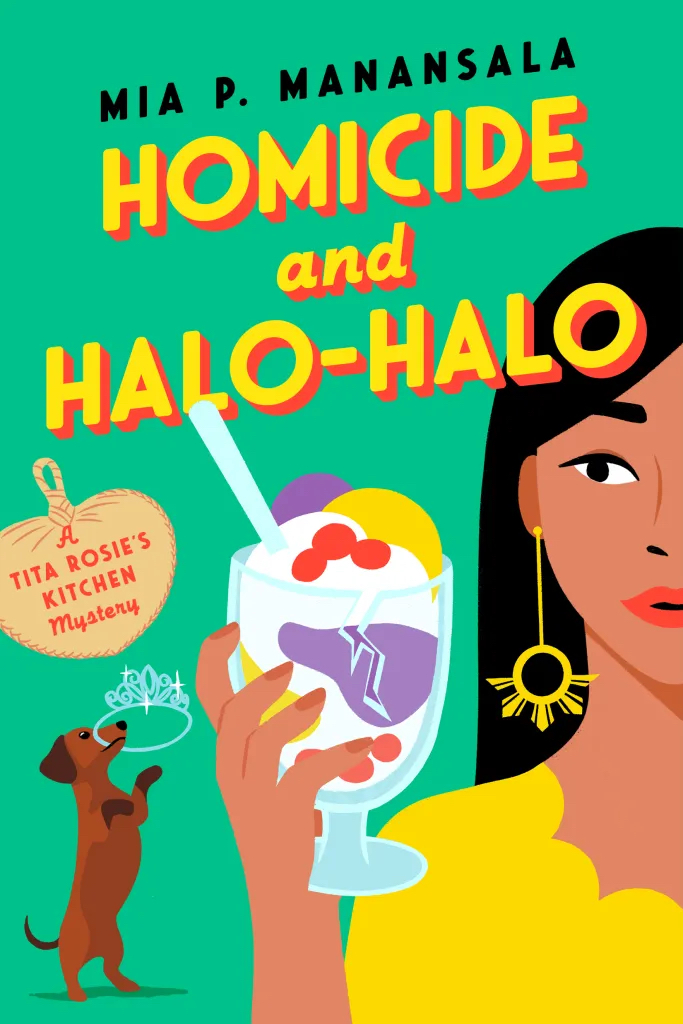
Author: Mia P. Manansala
Genre: Cozy Mystery / Culinary Mystery / Contemporary Fiction
Ideal For: Readers who love warm, character-driven mysteries infused with food, family, Filipino culture, and heart; fans of Arsenic and Adobo, Finlay Donovan, and Dial A for Aunties; anyone craving a story that balances humour with depth and a touch of emotional reckoning.
A Triumph of Flavour, Family, and Ferocity
With Homicide and Halo-Halo, Mia P. Manansala delivers a rich, layered, and utterly delightful second installment in the Tita Rosie’s Kitchen mystery series. It’s one thing for an author to create a successful debut — another entirely to craft a sequel that deepens the world, complicates the heroine, and raises the emotional stakes without sacrificing charm. Manansala does all of that and more.
Lila Macapagal is back, but she’s not the same Lila from Arsenic and Adobo. This time, she’s tender, tired, and teetering on the edge of burnout. And that shift elevates this book from fun cozy mystery to something textured, real, and emotionally resonant.
The Setup: A Beauty Pageant, A Murder, and a Very Reluctant Judge
When Lila is forced into judging the Miss Teen Shady Palms Beauty Pageant — an event she once won — she’s far from thrilled. Her pageant days carry emotional baggage, especially tied to her recently deceased aunt, whose complicated relationship with Lila casts long shadows. But things turn dire when one of the fellow judges, a former pageant rival, turns up dead.
Suddenly, the spotlight isn’t on the contestants — it’s on Lila. And once again, she finds herself dragged into a murder investigation that’s equal parts personal and perilous.
But this time, Lila isn’t just facing external threats. She’s battling the internal ones too: grief, trauma from the events of the previous book, and a creeping sense that she’s barely holding herself together.
This dual conflict — outer mystery, inner unraveling — gives the novel its emotional backbone.
A Heroine Who Is Allowed to Break (and Heal)
Cozy mysteries often lean on quirky charm, but Manansala approaches Lila with refreshing honesty. The stress of nearly dying in the previous investigation hasn’t magically disappeared. She’s not bouncing back instantly with a pun-filled comeback. Instead, she’s dealing with anxiety, insomnia, emotional withdrawal, and panic attacks.
These struggles aren’t treated as side notes — they shape her relationships, her choices, and her path forward.
This emotional dimension is what makes Homicide and Halo-Halo shine. Lila isn’t just solving a crime; she’s navigating the fallout of survival. Watching her claw her way toward healing, learning to lean on therapy, friends, and her community, adds incredible depth without ever feeling heavy-handed.
The book never stops being fun — but it also refuses to treat trauma as a punchline or a plot device. And that balance is where Manansala’s artistry truly shows.
A Mystery That Twists Like a Perfectly Twirled Palabok
Manansala’s plotting here is tighter, twistier, and more confident than in her debut. The pageant setting allows for a buffet of suspects, motivations, and messy interpersonal histories. The tensions between mothers and daughters, coaches and contestants, past winners and present rivals — all create fertile ground for secrets, grudges, and threats.
As Lila digs deeper, the clues lead not just to the murder but to the motivations that drive small-town politics, cultural expectations, and personal insecurities.
The pacing strikes a satisfying balance: brisk enough that you never lose momentum, but thoughtful enough to allow quiet emotional beats. By the time the reveal arrives, it feels both surprising and inevitable — the hallmark of a mystery done right.
Filipino Flavour: Food as Culture, Comfort, and Identity
One of the great joys of this series is how Manansala weaves Filipino cuisine into everything — not just as decorative flavor, but as emotional currency.
Halo-halo isn’t just dessert; it’s memory. It’s comfort. It’s the sweetness that gets Lila through sorrowful, stressful days.
The food descriptions — the bibingka, the pancit, the lumpia — don’t just make your mouth water; they anchor you in a culture that celebrates love through sharing meals. They are sensory bridges to Lila’s relationships with her titas, her best friends, and even her suitors.
Food in this novel serves as balm, bonding, and sometimes boundary — a way for characters to express what they cannot say aloud.
Community: The True Heart of Shady Palms
The Tita Rosie’s Kitchen series thrives not only because Lila is such a compelling protagonist, but because she exists in a world teeming with personality.
Tita Rosie and the Calendar Crew (April, May, June) remain comedic gold. Their meddling is loving, their gossip is relentless, and their affection is unconditional. When Lila’s mental state begins to fray, their concern becomes one of the book’s most touching threads.
Her relationships with Adeena and her romantic interests — Jae and Amir — evolve too. The love triangle simmers gently without dominating the plot, proving that romance can coexist with mystery without overwhelming it.
And then there’s the town itself. Shady Palms continues to be a fictional gem: a Filipino-American enclave that feels lived-in, textured, affectionate, and fiercely protective of its own.
Healing Through Humour and Heart
What really makes this book a knockout is how Manansala infuses tension with humor, and darkness with hope.
Lila’s sarcastic commentary provides levity, while the aunties’ antics add warmth and cultural vibrancy. Even in the face of murder, anxiety, and complicated grief, the book never lets you fall too deeply into despair.
Manansala’s ability to shift between tones — silly to serious, cozy to chilling — is masterful.
Craft and Style: An Author in Full Command
Manansala writes with a voice that is confident, sassy, and sharply observant. Compared to her debut, the emotional layers are deeper and the prose feels richer. Her dialogue is crisp, her comedic timing on point, and her descriptive writing mouthwatering.
While the story is accessible enough for readers new to the series, returning fans will appreciate how seamlessly she picks up Lila’s arc — not resetting her to “status quo heroine,” but evolving her into someone more complex.
This commitment to character growth is rare in cozy mysteries, and it elevates Homicide and Halo-Halo into something truly special.
Why This Is a Five-Star Read
Homicide and Halo-Halo isn’t just a good cozy mystery — it’s a meaningful one. It entertains, surprises, comforts, and challenges the reader.
It’s five stars because:
It allows its heroine to be human, to falter, to break, and to rebuild.
It builds a world full of food, family, and culture that feels vibrant and real.
It balances real emotional depth with comedic relief without cheapening either.
It delivers a mystery that is clever, twisty, and satisfying.
It shows growth — in the protagonist, in the writing, and in the series itself.
This is the rare cozy mystery that not only delights but stays with you — like the sweetness of halo-halo lingering long after the last bite.
Final Thoughts: A Warm, Wise, Delicious Mystery
Homicide and Halo-Halo is, simply put, a triumph. It’s a story about healing disguised as a murder mystery, a love letter to Filipino cuisine wrapped in suspense, and a portrait of a young woman learning that strength isn’t about pretending nothing hurts — it’s about keeping going even when everything does.
Manansala blends humour, heart, and homicide in a way only she can. Lila Macapagal remains one of contemporary fiction’s most endearing amateur sleuths — fiercely loyal, beautifully imperfect, and endlessly relatable.
If you love mysteries with personality and emotional teeth — or if you simply want a book that will feed your soul while keeping you guessing — Homicide and Halo-Halo is the perfect pick.