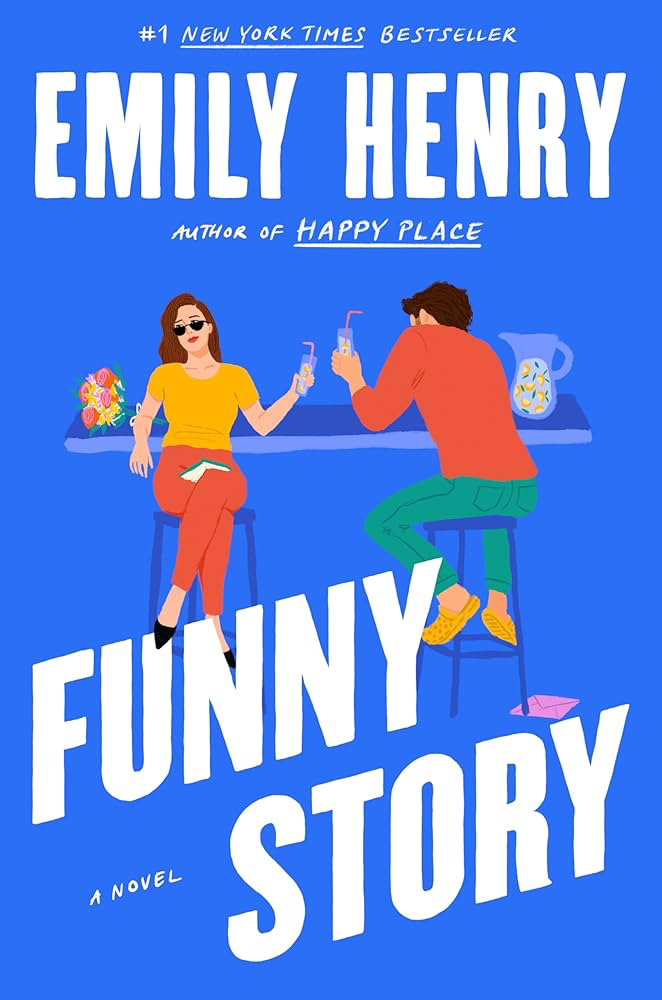
Author: Emily Henry
Genre: Contemporary Romance / Women’s Fiction
Ideal For: Readers who love witty banter, messy-but-relatable characters, soft emotional unraveling, and the kind of slow-burn connection that sparks even when the characters wish it didn’t. Perfect for fans of character-driven romance with depth, humor, and vulnerability woven through every page.
Introduction
Emily Henry has a signature: layered romance that makes you laugh first, then unexpectedly swallow a lump in your throat. Funny Story continues that tradition, offering a heartfelt exploration of heartbreak, healing, and second chances disguised as an opposites-attract roommate rom-com.
But while Funny Story carries Henry’s trademark humour and charm, it’s a different creature from her previous novels — quieter, a little more melancholy, a little more grounded. It’s not just about falling in love; it’s about rediscovering yourself after the version of your life you planned dissolves overnight.
This is Emily Henry writing at her most introspective, and though it’s not quite perfect, it’s tender, sincere, and profoundly human — earning a solid, glowing four stars.
Plot Summary (Spoiler-Free)
The novel begins with Daphne, a children’s librarian whose life implodes when her fiancé, Peter, suddenly leaves her for his lifelong best friend, Petra. Homeless, heartbroken, and humiliated, Daphne ends up moving in with Miles, Petra’s ex — a scruffy, chaotic musician who is, on paper, the exact opposite of her polished, orderly personality.
Both are wounded. Both are angry. Both have been abandoned by the two people who promised to love them.
What starts as reluctant cohabitation soon becomes something else: late-night conversations, shared vulnerability, and a plan to pretend they’re having fun together to throw off their exes.
But this isn’t really a fake dating book. It’s a healing book. A slow rekindling of trust. A story about building friendship first — and then something warmer, sweeter, and unexpectedly deep.
Emily Henry’s Voice: Sharp, Funny, and Surprisingly Gentle
Henry’s prose sparkles with her usual gifts — razor-sharp wit, clever dialogue, and chemistry that hums even in the scenes where the characters barely touch. But Funny Story stands out for its softness. There’s less emphasis on the dramatic rom-com beats and more on the quiet intimacy of two broken people learning how to exist again.
Henry writes Daphne with such empathy that her grief feels familiar:
the ache of a derailed future,
the embarrassment of failed love,
the loneliness after everyone moves on but you’re still stuck in the rubble.
Miles, meanwhile, is one of Henry’s warmest male leads — messy but kind, disorganized but emotionally perceptive, and unmistakably real. He’s the kind of character who sneaks up on you: slightly irritating at first, then gradually devastating in the best way.
Henry balances humor and heartbreak beautifully. Jokes slide into vulnerability. Teasing dissolves into tenderness. Pages that begin funny end quietly aching.
Themes That Give the Story Depth
1. Heartbreak and Reinvention
This is as much a post-breakup recovery novel as a romance. Henry captures the bewildering quiet after someone leaves you — the way the world keeps going, even when your plans collapse. Daphne’s journey isn’t about getting revenge on Peter; it’s about reclaiming herself.
2. The Unexpected Beauty of Found Family
The small-town Michigan setting becomes a refuge for Daphne. She builds friendships, community, and small rituals that help her rediscover who she is outside the context of a relationship. Henry excels at writing communities that feel lived-in and comforting.
3. Emotional Honesty as Love Language
The romance works because Daphne and Miles are honest in ways they’ve never dared to be with partners before. They share their grief, insecurities, and fears, creating a connection built on truth rather than performance.
4. Breaking Old Patterns
Peter represents the version of Daphne who played it safe — who molded herself to what stability “should” look like. Miles represents uncertainty and messiness, but also authenticity. The book gently asks: Which version of yourself feels truer?
The Romance: Slow, Sweet, and Rooted in Real Intimacy
This isn’t a fireworks-exploding, instant-chemistry romance. It’s a slow exhale, a gradual unfolding. The attraction builds through inside jokes, shared routines, and the kind of emotional baring that creates intimacy long before physical affection enters the picture.
The banter is delightful, but it’s the quiet moments that make the relationship shine:
reading together on the couch, cooking late at night, learning each other’s emotional rhythms, comforting old wounds with new tenderness.
The love story feels earned, adult, and grounded. Even if it’s not Henry’s most explosive romance, it may be her most emotionally mature.
Where the Novel Falls Slightly Short
Even as a four-star favourite, Funny Story has small imperfections:
1. The Setup Is a Bit Familiar
Breakup, roommates, opposites attract — it’s classic rom-com territory. Henry elevates it, but the premise isn’t as high-concept or instantly iconic as Beach Read or Happy Place.
2. The Middle Meanders
The emotional pacing is slow and sometimes risks treading water. There are moments that repeat the same emotional beats, and readers wanting a snappier arc might feel the drag.
3. The Exes Are Underdeveloped
Peter and Petra are central to the plot, but their motivations remain thin. They serve the story, but don’t fully stand on their own.
Still, none of this detracts significantly from the overall warmth and joy the book delivers.
Character Analysis: Soft, Flawed, and Endearing
Daphne
Daphne is one of Henry’s most relatable protagonists. Her attempt to rebuild her life — her fear of not being “enough,” her desire to be chosen wholeheartedly — hits home. Watching her become her own anchor, not just a satellite around someone else’s life, is deeply satisfying.
Miles
Miles might just win the award for “most unexpectedly lovable Emily Henry male lead.” He’s gentle, awkward, funny, emotionally available, and just messy enough to be human. His backstory is handled with nuance, giving him depth without falling into melodrama.
Their dynamic is wonderfully balanced: Daphne brings structure; Miles brings spontaneity. Together, they bring each other back to life.
Writing and Pacing: Quiet but Impactful
Emily Henry doesn’t lean on dramatic plot twists. Instead, she builds tension through emotional honesty. The story unfolds at a simmer, not a boil — which may surprise readers expecting something more explosive.
But that’s what makes Funny Story special: its maturity. Its sincerity. Its understanding that love grows in the small, unglamorous moments.
The Ending: Soft, Hopeful, and Satisfying
Without spoiling anything, the ending hits the perfect tone: hopeful without being unrealistic, romantic without being saccharine. Daphne and Miles earn their ending through growth, self-awareness, and genuine emotional risk.
It’s not a fairy tale — it’s something better: a believable, beautifully human happily-ever-after.
Final Thoughts: A Tender, Nuanced Romance Worth Reading
Funny Story is Emily Henry at her gentlest. It’s a story about heartbreak, self-discovery, and the quiet miracle of meeting someone who sees you exactly as you are.
While not her most dazzling or high-drama novel, it is one of her most emotionally grounded — and one that proves Henry can write not just chemistry, but healing.
It earns four glowing stars for its heart, humour, and honesty.
If you love romances where the real love story is partly about finding yourself, Funny Story will leave you warm, hopeful, and deeply satisfied.