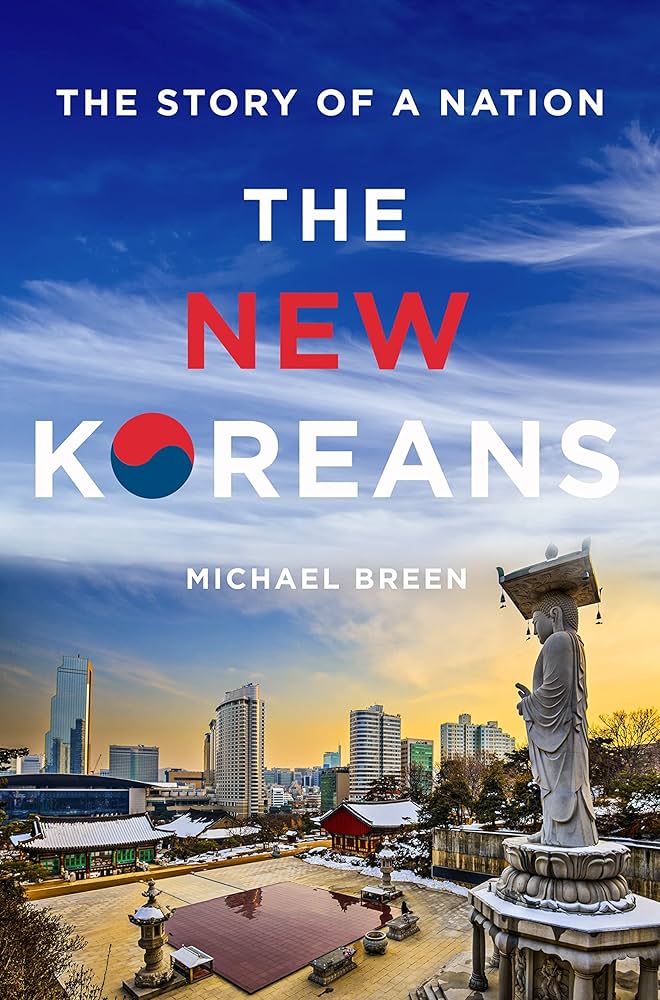
Author: Michael Breen
Genre: Non-Fiction / Cultural Studies / Modern History
Ideal For: Readers curious about South Korea’s meteoric transformation from war-torn nation to global powerhouse, and anyone seeking to understand the psychology, habits, and contradictions of its people beyond the headlines of K-pop, Samsung, and skincare.
The Premise: A Deep Dive Into the Korean Psyche
Michael Breen’s The New Koreans: The Story of a Nation isn’t just a history book — it’s a cultural x-ray. Written by a British journalist who has lived in South Korea for decades, this 500-page masterpiece aims to answer one deceptively simple question: Who are the Koreans, really?
With wit, empathy, and sharp observation, Breen dissects Korea’s extraordinary rise from post-war poverty to global success. But instead of stopping at economics or geopolitics, he goes further — exploring national identity, religion, family structure, generational conflict, and the social habits that define everyday life.
From politics and education to pop culture and personal etiquette, The New Koreans reads like both a social study and a love letter. It’s part cultural anthropology, part personal memoir, and part historical chronicle — the definitive portrait of a country that has reinvented itself faster than perhaps any other in modern history.
The Author’s Lens: Empathy Meets Journalism
Breen’s approach is what makes this book extraordinary. Having worked as a journalist in Seoul since the 1980s, he writes not as a detached outsider, but as someone who has lived and breathed Korea’s evolution. His voice balances respect and realism — admiring the country’s achievements while remaining honest about its flaws.
He combines the precision of a reporter with the curiosity of a sociologist. Every observation feels earned, shaped by years of lived experience. His humour is gentle and self-aware, and his insights are never condescending. Breen doesn’t lecture — he explains, questions, and often laughs with his subjects.
When he describes South Koreans as “a people in a hurry,” it’s not criticism; it’s affection mixed with astonishment. He sees their drive not as mere ambition but as collective survival instinct — a national trait forged through trauma, colonialism, and war, yet transformed into resilience and pride.
What the Book Covers
1. History With Human Texture
Breen begins by contextualising Korea’s turbulent 20th century: Japanese occupation, the Korean War, dictatorship, and eventual democratisation. But instead of drowning the reader in dates and data, he filters history through emotion — how these events shaped character and worldview.
He explains why hierarchy and loyalty are so deeply embedded in Korean society, why social harmony often trumps individualism, and why progress has been pursued with such intensity. His chapters on the 1980s democratisation movement are particularly moving, portraying the courage of ordinary citizens who redefined freedom in their own cultural terms.
2. Society, Hierarchy, and Identity
Breen’s sociological observations are both insightful and entertaining. He unpacks the invisible rules of Korean life — from language honorifics and workplace etiquette to family roles and gender dynamics.
He discusses the Confucian roots of social hierarchy and how this philosophy coexists with hyper-modern capitalism. In offices, for instance, the expectation of respect for elders clashes with the meritocratic speed of global business. Breen doesn’t just point this out — he shows how Koreans negotiate these contradictions daily, often with humor and adaptability.
3. Religion and Values
Korea’s religious identity is complex — a mix of Buddhism, Christianity, shamanism, and secular pragmatism. Breen explores how spirituality coexists with material success, arguing that Koreans’ faith systems are less about dogma and more about meaning-making in a high-pressure society.
He writes beautifully about how shamanistic rituals persist even in skyscraper-filled Seoul, revealing a culture that embraces both ancient superstition and cutting-edge innovation without contradiction.
4. Modernisation and the “Miracle” Narrative
One of the most fascinating sections of The New Koreans deals with South Korea’s economic miracle. Breen traces how a country once poorer than North Korea became the world’s 10th-largest economy. Yet he goes beyond policy and industry to explore the mindset that fuelled the change: discipline, national shame, pride, and relentless competition.
He captures the paradox perfectly — a nation obsessed with success but haunted by insecurity, driven by both fear of failure and a desire for recognition.
5. Cultural Exports and Soft Power
Before K-pop and Squid Game became global phenomena, Breen predicted the cultural explosion. His discussion of Korea’s creativity, ambition, and self-reinvention feels prophetic. He shows how pop culture has become not just entertainment but a political tool — a way for South Korea to redefine its global identity after decades of being overshadowed by its neighbours.
Yet he never romanticises it. He acknowledges the pressures behind perfection — the brutal work culture, the obsession with image, the struggle for authenticity in a society built on appearances.
The Tone: Accessible, Witty, and Insightful
Despite tackling big themes, Breen’s tone is refreshingly conversational. He peppers serious analysis with humor — anecdotes about cultural misunderstandings, dinner conversations, and social faux pas that reveal deep truths about Korean behavior.
At times, you almost forget you’re reading non-fiction because the prose flows so effortlessly. Breen can pivot from describing an ancient shamanic ritual to analyzing Samsung’s corporate culture with the same ease. His humor never undermines the gravity of his insights; it humanizes them.
He’s particularly adept at capturing emotional nuance — the tension between pride and humility, modernity and nostalgia, unity and exhaustion. In his hands, “han,” the Korean concept of deep, inherited sorrow, becomes more than an academic idea. It becomes the emotional heartbeat of an entire nation.
Why This Book Stands Out
1. It’s Balanced.
Breen neither glorifies nor criticises blindly. He celebrates Korea’s achievements — from its tech dominance to its cultural diplomacy — while acknowledging growing pains: gender inequality, aging demographics, and overwork culture.
2. It’s Informed by Lived Experience.
Unlike many “expat analyses,” this isn’t a book of surface observations. Breen writes as someone who’s seen Seoul transform before his eyes, who’s eaten kimchi in homes, argued politics in bars, and interviewed presidents and poets alike.
3. It Connects the Micro and Macro.
From economic policy to the etiquette of pouring soju, Breen connects the dots between national psychology and daily life. He shows how something as small as bowing etiquette reflects broader social philosophy — respect, order, and relational awareness.
4. It’s Deeply Human.
The greatest strength of The New Koreans is empathy. Breen loves his subject, but not blindly. His affection comes from understanding — from seeing the contradictions, the striving, the humour, and the heartbreak.
The Emotional Undercurrent: Pride and Pain
One of the book’s most moving threads is the idea of transformation through trauma. Breen argues that Korea’s astonishing resilience — its drive, competitiveness, and emotional intensity — stems from historical suffering. From Japanese colonisation to the devastation of the Korean War, collective pain became the seed of national pride.
This, he explains, is the origin of the “Korean miracle.” The hunger to rebuild wasn’t just economic — it was existential. A nation once dismissed as a “hermit kingdom” became determined to prove its worth. Every skyscraper, every Olympic medal, every global brand carries that emotional inheritance.
Breen doesn’t romanticise suffering; he contextualises it. By tracing how pain became productivity, he captures something universal: the human ability to transform wounds into fuel.
Cultural Portraits That Stay With You
Throughout the book, Breen introduces us to unforgettable slices of Korean life — not abstract ideas, but vivid, tangible moments.
He describes the chaos of Seoul traffic as a metaphor for collective willpower: “Everyone pushes, yet somehow no one crashes.” He paints scenes of university students studying until dawn, elderly street vendors outworking people half their age, and families gathered around the table sharing stories and food with reverence.
Every vignette carries meaning. These are not caricatures; they’re living, breathing people in the throes of constant reinvention.
Why It Deserves Five Stars
Because it accomplishes something few books manage: it captures the soul of a nation.
The New Koreans isn’t just about Korea — it’s about transformation, identity, and what it means to define oneself in a rapidly changing world. It’s about how tradition can coexist with innovation, how collective ambition can both empower and exhaust, and how pride can emerge from pain.
Breen’s voice is clear, compassionate, and curious. You finish the book not just informed, but changed — suddenly aware of the complexity behind every K-drama, every Samsung phone, every Korean headline.
The Takeaway: Korea, Seen Clearly
The New Koreans is essential reading for anyone who wants to move beyond stereotypes and understand what drives one of the world’s most dynamic societies. It’s informative enough for academics, engaging enough for general readers, and beautifully written enough to stand as literature.
It reminds us that South Korea is more than its pop culture exports — it’s a living experiment in resilience, identity, and reinvention.
In the end, Breen leaves us with a quiet revelation: that to understand Korea is to understand change itself.